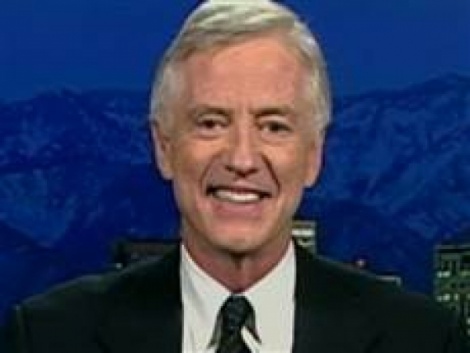
Video: Dr. Joseph E. Stiglitz Interviewed by Cenk Uygur, June 15, 2012, with Full Transcript

Get the Flash Player to see this content.

Cenk Uygur: Hi, we’re back on the Young Turks and we are going to talk about income inequality here. It is interesting that there is a huge misconception that people have about inequality. In fact, they did a poll on this, and they asked, what do you think should be the right amount of percentage of wealth for the country to have for the top 20%? And the American people said that 30% of wealth should be in the top 20%.

Now that makes sense, right, and it’s logical: they are in the top 20% so they should get more than 20%, right? And I actually think that number should be higher.  I guess the country is more liberal than I am, significantly more liberal than I am.

But when you ask them, hey, what do you think is the percentage of wealth for the top 20%, then they answer 60%. But when you find out the reality, [the real percentage of our country’s wealth that the top 20% of our population have], it is actually 85%!  It’s a much more unequal society than they realized, let alone what they think it should be.

A guy who has written a little bit about this and might know a thing or two about inequality is Dr. Joseph Stiglitz. He is a Nobel Prize winner, in fact, he has won really one and a half: one he shares with Al Gore in some ways as part of a team, and also of course a Nobel Prize in economics. The book is “The Price of Inequality and How Today’s Divided Society Endangers Our Future”, and he teaches at Columbia University. Now great to have you here.

So now we are told by the Republicans and conservatives, no, inequality is awesome because if you give all the money to the rich, eventually, you know, they are so productive that they actually raise everybody’s standard of living. True or untrue?

Joseph Stiglitz: Untrue. This is the old-fashioned old idea of trickle down economics. Throw enough money at the top, everybody benefits. I wish it were true because we’ve thrown so much money at the top, yet if it were true, we’d all be great.

In fact, in recent years the middle has been doing very badly. The middle median income today is the same as it was a decade and a half ago in terms of wealth. New numbers just coming out this week from the Federal Reserve show that the wealth of the middle America is the same as it was the in beginning of the ‘90s.

Cenk Uygur: So no increase there. In fact I’ve seen the charts between 2001 and 2010, it went way down for middle-class earners. The only category it went up for unsurprising was the top 10%.

Joseph Stiglitz: And the top 1% did fantastically. They’re getting now 20% of all the income. In 2010, the year of recovery, they got 93% of the gains.

Cenk Uygur: So it appears that it’s a trick really to take money from the middle class and to give it to the very rich, and that the rest of it is just a bunch of excuses. We are going to talk more about inequality in a second but let’s talk about the politics of it for a second here before we move on.

Do you think that all of the people at those so-called think tanks who are funded by the Koch Brothers, etc., right, all the Republican politicians, some of the Democratic politicians, may actually have bought into this myth, or do you think, ah, this will be a nice cover for all of us to get paid.

Joseph Stiglitz: I think it is a sales job they’re doing. An example [was] with Paul Ryan:  when the data came out about how it would influence society, he said, we don’t care about equality of outcome. What we care about is equal opportunity.

The sad fact is that the United States is not only the country with the most inequality in outcomes, it is the country with the least equality of opportunity.  [Today in America, a] kid’s life prospect is more dependent on the education and income of his parent than in any advanced industrial country for which we have data on.

Cenk Uygur: Now that fact is never publicized in this country. And that’s why I often times get really frustrated with Democrats. I don’t think that they are progressives in reality. Because if you were a true progressive, wouldn’t you shut out from the roof tops, we killed equality of opportunity? We are supposed to be the land of opportunity. We are ranked the worst in that now among these developed countries.

So you say that there are other harms to inequality: increasing instability, reducing productivity, and undermining democracy. Why is that the case?

Joseph Stiglitz: Taking instability, it is not an accident that in the run-up to this recession, inequality reached such a high level. And in the run-up to the Great Depression, inequality reached a peak. The principle is very simple. Those at the top don’t consume all of their income. Those at the bottom do; they have no choice. So when we take money from the bottom to the top, total demand goes down.

There’s a tendency of the Fed when they see demand down to try to goose the economy. And that’s what they did in the years before the crisis. They goosed the economy through a bubble. But a bubble is not going to be sustainable; every bubble eventually breaks. And so that’s how inequality generates the kind of instability that we are going through.

One of the reasons we’re having such a weak recovery is demand is so weak. And one of the reasons demand is so weak is we have so much inequality.

Cenk Uygur: It seems like there’s a battle between enlightened self-interest [and short-term greedy] among the rich, because some rich, some millionaires, are coming out and saying, wait a minute, if there is no one buying our products, we are all going to go broke, right? And the guys who are short-term greedy, saying, no, I want all the taxes, I want all the money, etc. And if we go in this direction, one, I feel like they are going to crash the economy again and this time even worse. Am I being too pessimistic about that, or do you think that is the direction we are headed?

Joseph Stiglitz: I think that there is a significant risk, and let me put it in the following way. One of the lessons that most economists took out of the crisis was that we needed, for instance, to get our banks back to the boring business of lending and away from gambling and risk-taking. We didn’t do that. We said we have to make our banks more transparent. We didn’t do that.

In fact, in some ways the financial sector is worse because we made our big banks even bigger: too big to fail; too big to be held accountable. And the result of that is there is an incentive for them to engage in more risk-taking.

Cenk Uygur: Is it definitely going to blow up again?

Joseph Stiglitz: I don’t want to go that far but I think the risk is very high.

Cenk Uygur: Yeah I would. I think it’s inevitable. It’s just a matter of logic. If you keep taking this level of risk you will at some point crash.

Joseph Stiglitz: A chief example is what happened to JP Morgan. One company betting so much, losing overnight $2, $3, $4 billion, but we don’t know how much because it [the behavior of the banks] is so lacking in transparency.

Cenk Uygur: Exactly right. Now don’t just take my word for it. Nobel Prize winner in economics here, Professor Stiglitz, thank you so very much for joining us. We really appreciated it.

Transcribed by The Barefoot Accountant
Accountants CPA Hartford, Connecticut, LLC
Certified Public Accountant
Certified QuickBooks ProAdvisor

Cenk Uygur failed to follow up with the most critical question for the interview of Professor Joseph Stiglitz: so what do we have to do to reverse this inequality in income and wealth?

Speaking for Professor Stiglitz, the answer is obvious: reverse the process that has been occurring over the past thirty (30) years. Raise the highest marginal tax rates significantly on the wealthy, change the tax laws to end subsidies and tax loopholes for the wealthy, eliminate the capital gains tax rate for investment income, including that on the “carried interest” of investment CEOs and hedge fund managers, return the estate tax to previous levels and exemptions.

In addition, slash our imperialistic military budget, and instead of building infrastructure on foreign soils, invest in our infrastructure at home, creating jobs here in America.

Finally, reinstate and enforce both the Glass-Steagall Act as well as the Sherman Anti-Trust Act, separating commercial from investment banking and breaking up the big banks.

This was the failure of President Obama, who ran in 2008 on a platform of “change”, “hope and change”, “change you can believe in”, “change the way Washington works”. President Obama surrounded himself with Wall Streeters instead of Progressive economists like Professor Joseph Stiglitz, Paul Krugman, and Robert Reich.

William Brighenti, Certified Public Accountant, Certified QuickBooks ProAdvisor
Accountants CPA Hartford, Connecticut, LLC

Posted in Accountants CPA Hartford, Articles | Tagged , , , , , , , , , , , , , , , , , | 2 Comments

Video: President Obama says “the private sector is doing fine.” Now I understand why 23 million Americans are still without a job! Our President is clueless!

President Barack Obama may have doomed his chances for a second term as President of the United States today because of a remark he made during a press conference at the White House today on June 8, 2012:

President Obama: The truth of the matter is that, as I said, we created 4.3 million jobs over the last 27 months, over 800,000 just this year alone.

The private sector is doing fine. Where we’re seeing weaknesses in our economy have to do with state and local government. Oftentimes cuts initiated by, you know, Governors or mayors who are not getting the kind of help that they have in the past from the federal government and who don’t have the same kind of flexibility as the federal government in dealing with fewer revenues coming in.

Duh?! Does Marie Antoinette’s remark dismissing the starvation of millions of Parisians, “let them eat cake”, ring a bell?
 
“The private sector is doing fine”?!?! The world renowned economist, Paul Krugman, recently characterized our economic situation as a “depression”, and our President says during a White House briefing today that the private sector, the business sector, is doing fine, has created sufficient jobs for the 23 million Americans who are unemployed?!?!

Is this the Presidential gaffe that dooms President Obama’s prospects for re-election this November? Do you recall that other great Presidential gaffe back in 1976, when President Gerald R. Ford declared in response to a question from the New York Times’ Max Frankel, “There is no Soviet dominance of Eastern Europe”?

That remark cost President Ford his chances for re-election in 1976. All Republicans need to do after their convention this summer is just keep showing on television a video of President Obama saying over and over again, “The private sector is doing fine.” To make such a remark when 23 million Americans are out of work shows just out of touch President Obama is with the economic struggles of lower and middle class families and explains why his economic policies have failed over the past three and one-half years. Bolder, more aggressive, economic policies in 2009 when the President had a sufficient majority in Congress would have created a much better economy and employment situation in the United States today than the depression we now find ourselves in and from which we cannot escape.

No, Mr. President, the private sector is not doing fine. Perhaps if you had not surrounded yourself with economic advisors from Wall Street, like Larry Summers, Timothy Geithner, Lew Jacobs, et al, and had listened to the voices of labor, like Robert Reich, Paul Krugman, et al, the private sector would be doing much better, and real unemployment would not be around 20%.

It’s deja vu all over again:  Marie Antoinette, Gerald Ford, Neville Chamberlain….now, Barack Obama….

The Barefoot Accountant
Accountants CPA Hartford, Connecticut, LLC
Certified Public Accountant
Certified QuickBooks Advisor

Posted in Accountants CPA Hartford, Articles | Tagged , , , , , , , , , , , , , , , | 1 Comment

Barefoot Accountant’s Exclusive Interview of Rocky Anderson, Presidential Candidate of the Justice Party, on May 29, 2012: Video and Transcript

Rocky Anderson

Get the Flash Player to see this content.

Barefoot Accountant: I would like to thank you for giving me the opportunity to interview you. I saw you on the Cenk Uygur’s show, The Young Turks, last December in 2010, where you seemed to speak what most Americans want from their leaders but are not getting from the two political parties that are in power.

I did become aware of the fact that Jon Stewart interviewed you, but I have never seen Wolf Blitzer or Chris Matthews interview you. Did Chris Matthews interview you yet, Rocky?

Rocky Anderson: I was interviewed by Chris Matthews but that was many years ago, and I think it was about the Olympics: that was when I was mayor of Salt Lake City. The same with Wolf Blitzer.

Barefoot Accountant: That’s sad because it seems to perpetuate the two party system that we have; it doesn’t allow us to have a third voice. But other than Cenk Uygur, has anyone else from the major media interviewed you since you announced your candidacy for President?

Rocky Anderson: Yes, I have been on CNN, MSNBC, RT Television; I was on with Amy Goodman on Democracy Now, Rachel Maddow, Chuck Todd. I actually had gotten quite a bit of good media coverage, especially right after I announced that I was running, but it’s not very consistent and it’s certainly not anywhere close to media treatment of the Republican and Democratic candidates, which I think is really unfortunate because although they are making it look like they are saying different things, neither of these candidates are talking about a change in the real fundamentals.

Things like getting the corrupting influence of money out of our political system. And they are not likely to say that because they are benefitting tremendously from that. They have their hands out bringing in millions and millions of dollars weekly, and becoming beholden to those who are contributing to their campaigns in the meantime.

It basically is a fact that Congress and the White House are basically on retainer to represent the interests of those who have contributed to their campaigns and who fund the lobbying blitzes that take place in Washington. And all the time the public interest is being shafted.

My voice, and the voice of other third parties and independent candidates, has basically been censored by the system that has been so rigged by the two parties, even to the point where the two parties hijacked the Presidential debate away from the League of Women Voters: they formed their own Presidential Debate Commission, which makes it sound like that there is some kind of independence to it but the fact is that the Presidential Debate Commission is entirely organized and run by the dictates of the two dominant party candidates. Without the blessing of both the Republican and Democratic candidates, third-party or independent candidates are excluded – all further eroding any semblance of our democracy. Once again, the king-makers – owned and operated by corrupting corporate money – call the shots, while the public interest is further betrayed.

Barefoot Accountant: It’s unfortunate that it becomes so difficult and expensive for a third-party candidate to get the exposure and to even get on the ballot. I suspect that other third party candidates are experiencing that difficulty besides you.

I recently saw the interview of Ralph Nader’s endorsement of you, which was on April 17th. Brian Montpoli of CBS News, a political reporter, hosted Ralph Nader on his show. And Ralph gave you a glowing endorsement. I was very impressed by that. He called you very, very progressive: that you had a very, very progressive record. Of course, he mentioned your two terms as the mayor of Salt Lake City. But he also pointed out that your background includes that being a Constitutional attorney and a civil rights lawyer, which I was very pleased to hear and to learn.

And he gave examples of your progressive positions: about public financing, about the minimum wage, cutting the defense budget by at least 50%, and the environment, and so on and so forth. Can you iterate your major positions and how they contrast to those of the Democratic and Republican candidates?

Rocky Anderson: First of all, I was very appreciative of Ralph’s support of me. He never uses the word endorsement; he makes a point about that. I think the word support is better because he does not want to defend what something that I might say or do and have people say that he endorsed it.

I think that he and I see things through very similar lens. And that is, that our government should be acting on behalf of we, the people, and not be sold out to those who simply have the money to buy and pay for these politicians in Washington. So much of the failure in public policy that we talk about is due to that corrupting influence of money. You only have to follow the money to see why it is that we have so many public policy disasters, both emanating from the White House and the United States Congress.

Let’s take the biggest disaster that’s looming, and that is the failure of the United States to provide the essential international leadership on climate change. There is only one reason that we are not doing the right thing given the state of knowledge in the scientific community, near unanimity, probably 96%, 97%, of scientists in agreement about the scope of the problem with climate change; the causes, the human causes of climate change, primarily the burning of fossil fuels and the destruction of forests; what can be done about it; what we are going to see in the future, the catastrophic consequences of climate disruption if we don’t take action now.

And people in the future are going to look back and say, why didn’t they, based on the knowledge that they had take responsible action to save us from these cataclysmic consequences? And I think the clear answer is the people in our political system have been bought off primarily by the fossil fuel industries, the coal, oil, and gas companies, and that’s why they haven’t acted in the interest us, the future generations, and the world’s inhabitants everywhere now and far into the future.

Same thing with health care. Bill, we’re the only country in the entire developed world that doesn’t provide essential health care for all citizens. It’s immoral. It’s politically incredible that we haven’t reached the point that every other industrialized nation has reached. They may go about it different ways, but not one of them rely upon for-profit insurance companies for the provision of basic healthcare. But we could we do in this country and it’s gotten so bad that when President Obama pledged to fix the system, he’s sold out entirely, as did Congress, to the for-profit insurance companies as well as to the pharmaceutical industry and that’s why our premiums continue to go up.

That’s why we have still the health care system that’s more than twice as expensive as the average among the industrialized world, and why even if the Obama health care plan is fully implemented, twenty three million Americans still will be without basic health care.

Follow the money. That’s why we are in the bind that we are in here in the United States today.

Barefoot Accountant: Rocky, if you were President and you had the backing of Congress, what system would you have proposed? I was very disappointed, you know, in 2008, I believed in President Obama when he said “change you can believe in”, “hope and change”, “change the way Washington works”. And I started to become very disenchanted starting in the spring of 2009, and then progressively it deteriorated. And I love your quote that I guess you uttered sometime in two thousand eleven when you left the Democratic party. And I think I beat you to that: I registered as an Independent before you did.

I expected President Obama to at least propose the public option; and he never proposed it! And I thought that was unconscionable. Ideally I would have proposed the single-payer system because I think probably that would be the most effective. But I’d like to hear what you would have proposed if you had—let’s just say you had the backing of Congress, and by the way he had, I think, fifty nine, sixty, votes in the Senate: he had the Congress in two thousand and nine. So what would you have proposed, Rocky?

Rocky Anderson: I would have proposed what the majority of the American people wanted, and that is the single-payer, Medicare-for-all system, so that you take out all of the profits that are going to the insurance companies, their marketing costs, payment of people to sit around in offices and try to figure out how to deprive us of coverage for insurance for which we paid outrageous premiums. This is what the American people want, and there is very good reason for it.

Single-payer systems have been incredibly successful in those countries where they’ve been implemented. But even multiple payer systems where they have been nonprofit insurers, like in Germany, it works out very well there as in Italy. Canada’s system, Taiwan’s system, they are single-payer systems: that’s what we need in this country because if we have those multiple payer systems I think you would see the same kind of corruption in Washington lead us to a far less efficient system.

And we have a single-payer system but it only applies to people above a certain age and that system is Medicare. We also have a socialized system in this country: it’s called the VA hospital, where not only the payer is the government but also the medical facilities belong to the government and those who work there are employed by the government. And the VA hospital has had some problems in the past but actually in terms of the quality of medical care, it’s ranked, I read recently, even above the Mayo Clinic for excellence in the services provided. So there are different ways of getting there but I think very clearly the single-payer Medicare-for-all system is where we ought to be.

Now President Obama promised a lot of things during his campaign, and I know that there a lot of people that wanted to believe. I frankly warned people that they were going to be vastly disappointed because I saw all sorts of signs even leading up to the election. President Obama promising us that he would join a filibuster when he was in the United States Senate and help block proposed legislation that would provide retroactive criminal immunity for telecommunication companies for their involvement in the illegal surveillance of American citizens communications. And then as soon as then Senator Obama won the Democratic nomination, he turned one hundred and eighty degrees and voted in favor of that legislation. And that’s after three telecommunication companies spent twelve million dollars during a three-month period of time for its lobbying blitz.

Now how many of us get to commit federal felonies and go to Congress and get Congress to say, “oh, never mind, we will grant you retroactive immunity under the law.” That’s the kind of two-tiered system we have in this country: two-tiered system of justice. We’re supposed to be a people who believe in liberty and justice for all and yet it really is a system where the system of justice is different depending on how powerful you are and how wealthy you are.

So President Obama showed his stripes even before he was elected. He voted for full funding for the illegal occupation of Iraq when he was in the United States Senate. He was in the hip pocket of the nuclear power industry when he was in the Illinois legislature. So when we started moving into that health care debate and he wouldn’t even put universal single-payer healthcare on the table, it didn’t come as much of a surprise that then he would back off on the notion of a public option.

But what really surprised even me is how timid he was, how quickly he took that option off the table. It’s almost like all the Republicans had to do was snarl a little bit and say that they were going to oppose public option and he came out, I’ll never forget his words, “Well a public option isn’t essential for health care reform.” That’s what he said. You know, at that, the insurance companies looked at it and they must have just been skipping all the way to the bank after that because now we got a system where the government purports to be able to tell everyone of us that we have to buy this perverse product from for-profit insurance companies.

Barefoot Accountant: Amazing. By the way, Glenn Greenwald wrote an excellent book, “With Liberty and Justice for Some”. Perhaps you’ve read it. Is that why you chose the name for your party, Justice Party?

Rocky Anderson: No.

Barefoot Accountant: Why did you choose the name, justice, for the name of your party, the Justice Party?

Rocky Anderson: Because it connotes fairness and equity. We talk about economic justice, social justice, and environmental justice. And I think that the word justice captures perfectly well what it is that we are pursuing as the Justice Party and what I am talking about throughout this entire campaign.

There is no justice in a nation where we have the greatest economic disparity in terms of both wealth and income than at any time since the 1920s. Think about the massive increase in wealth during the past decade, more than decade, when there has been such great economic growth and yet stagnant wages for working men and women and their families. We built up a very healthy, thriving middle class after World War II. There was fairness in taxation: the wealthy were finally paying their fair share; it may have even gotten to the point where they were paying more than their fair share at least in the highest income tax brackets.

But now it’s just amazing to me that for the first time in our nation’s history that we could have been fighting two wars and charging it to our children. And at the same time, not just failing to pay as we went along and raising the revenues but actually giving massive tax cuts to the wealthy. These tax cuts, if they continue, are going to cost our nation trillions of dollars. And we’re not looking out for those who come after us. We’re not really interested in reducing our debt when we turn a blind eye to the revenue side of our budget.

Sure, there are cuts that can be made. But it takes both. You know, if you run up your family credit card, you just don’t just say, “well, we’ll start spending less.” You’re going to have to go out and bring in more revenues to get it paid off and pay off the interest. But we are wasting so much money in interest payments on this outrageous accumulated debt in the neighborhood of $16 trillion right now. We pay every year as much in interest on that debt as we spend on twelve departments of the United States government. And that just screams out lost opportunities. And it also screams out that we really are mortgaging much of the future of later generations.

And at the same time with the baby boom generation now moving into retirement, fewer of us in the workforce, and not altering social security, we ought to be means testing it so that the wealthy who don’t need it aren’t going to be drawing off of it. At least it ought to be staged in over time, a means testing.

But we also have a cap on the payroll taxes for social security. So those who make over $110,000 a year are paying much less of their income as a percentage of income than what the rest of us are paying. There is no equity in that. There’s no justice in that. So that’s just one example, of course, and we could go on all day long to point out the injustices. But at the core of this, at the very root of it, is our system of government that has become so corrupted by money that nobody questions anymore on the right, the left, the middle, nobody wonders anymore why it is that Congress and the White House do or fail to do what they do because of the impact of money.

Barefoot Accountant: By the way, I agree with you 100% that the $110,100 cap on social security saves Mitt Romney 12.2% in taxes every year. And the reports are saying that in 2036 we are going to have a shortfall in social security and that we will only be meeting the obligations of 75%. That could easily be rectified by uncapping or raising the social security limit. I find it unconscionable that Warren Buffet and others are only taxed at 11%. When you and I have our own business, we are paying 15.3% in employment taxes right there plus we are paying federal income taxes, and we don’t get that capital gains tax break of 15%, which is ridiculous.

Also Congress voted down a House Bill, in fact, Chris Murphy, who is running as a Democrat for the U.S. Senate from Connecticut, also voted down that same House Bill, that would have tax “carried interest” not at capital gains rates. In other words, hedge fund managers, and investment CEOs are being taxed at 15% instead of 35%, what most Americans are being taxed at. That is egregious.

By the way, I am a little bit older than you: I was born in 1948. And I remember the highest marginal tax rate being 91%. When JFK became President, and then Lyndon Johnson, that rate came down to about, I think it was 77%. And we had a great boom. And he also introduced the investment tax credit an when the capital gains tax rate came into effect, I’m recalling this from memory as a child, but I think the capital gains tax break was half of the capital gains was not taxable and the other half was taxable at ordinary income tax rates, not 15%, but as high as 77%.

I saw a major change in tax policy and in the Democratic Party beginning around 1980. I was at Purdue University, and I was in a strategic management class, and I was the only one who saw major corporations, large conglomerates, as something to be concerned about: everyone was for it. Here were all your future MBA people that were buying into this big phenomenon, ignoring the Sherman Anti-Trust Act. I never hear that mentioned except from Ralph Nader and a few others.

In 1980 when Ronald Reagan came in, he lowered the highest marginal tax rate in the Tax Reform Act of 1986.  Then George Bush came in and raised it up, but I just saw a major change occurring in America and since nineteen eighty, as you mentioned, the greatest transfer of wealth occurred: the elite class increased their wealth by over four hundred percent while for 99% of Americans, their wealth has declined. So a lot of this has occurred because of the change in the tax policy, empirically if you look at the evidence.

Rocky Anderson: And a lot of it is because of the Democrats back then, but did you hear about Nancy Pelosi’s latest proposal—illustrating what the Democratic leadership in Congress has become—that she’s proposing now that instead of eliminating the budget-busting Bush tax cuts for those who make over two hundred fifty thousand dollars, she is suggesting that the tax cuts be eliminated only for those who make over a million dollars a year.

Barefoot Accountant: Well I think Obama even suggested that before her, too, right? Wasn’t that Obama’s proposal, too?

Rocky Anderson: No, he has been talking about two hundred and fifty thousand dollars. He apparently lacks entirely the capacity to go out and make his case to the American people so that they’ll push Congress to do the right thing. And so now what do we see from the Democrats? Moving up the two hundred fifty thousand dollar mark and allowing the Bush tax cuts to remain for everyone up to a million dollars. That’s unconscionable.

That’s telling our young people that we really don’t care about shouldering you with this enormous debt and the interest burden that they’re going to be shouldering. It’s saying that we’re not really serious about cutting our deficits, about getting a handle on our nation’s debt. And it’s telling working class people that there’s not a party anymore that’s really looking out for you.

Now those Bush tax cuts were to have expired. That was the promise made to the American people. Now the Republicans forced President Obama—but it’s not a force that I think he couldn’t have dealt with if he had anything in him to do it—he promised during his campaign to do it. He caved on those just like he caved on the public auction for health care. And now they’re actually talking about caving on not letting them expire except for those who make more than a million dollars a year.

People in this country, the middle class, should dismiss him completely out of town and say, you know, you are just trying to out Republican the Republicans. We are not going to put up with it anymore, they ought to tell the Democrats generally, and we all need to come together and change the system. And that’s why we formed the Justice Party, and it’s time to act.

You know, we watched people throughout the Arab world stand up against their dictators. It’s time that we, the American people, shrugged off our complacency, stood up, took a stand, and said, we’re not going to fall for this lesser of two evils nonsense anymore. This nonsense about spoiling the election. We are all going to assert ourselves, we’re going to draw the line saying we’re not going to put up with this anymore. We are going to support in different parties, support different candidates, and never again fall for this duopoly of the Republican and Democratic parties who profit so much from the corruption of our government.

Barefoot Accountant: By the way, I noticed a change in the Democratic Party up when bill Clinton was in office. You know, Alan Greenspan was hailed as the greatest Federal Reserve Chairman since the birth of the nation and he surrounded himself with Wall Streeters. A lot of changes occurred on Wall Street under Bill Clinton’s watch.

Rocky Anderson. Well, he got rid of the Glass-Steagall Act in 1999. Alan Greenspan actually even with Glass-Steagall in place had allowed the merger of an insurance company, an investment bank, and and a commercial bank. He found a way to do that and then Bill Clinton basically said, and Congress said, well, we might as well open it up for everybody. Unbelievable that they would that they would let things get set up for this kind of economic disaster we faced. And now it’s more and more deregulation.

You know, Bill, my problem isn’t so much with the greed on Wall Street because we expect people to be greedy on Wall Street. And except for the massive fraud that took place, and every one of them that engaged in that ought to be held accountable, but they never will because Wall Street contributed so much to President Obama’s campaign and he surrounded himself with so many of these people, who would expect that they would ever prosecute anybody for their illegal conduct. Again it is this two-tiered system of justice that we have.

But when Congress and the regulators have deregulated to the point that these folks were able to engage in this reckless speculation and putting these fraudulent products on the market, these derivatives, putting these toxic mortgages together, and then selling them as if they were triple A rated securities. And you know who bought them? And it wasn’t just other banks; it was pension funds, working men and women retirement funds that were buying these products and now have suffered such a tremendous loss: on average around the country, one third of the value being lost. So all anybody needs to do is look at their 401(K) plan or their pension plan and see the losses from two thousand eight forward. We need to hold accountable all those who helped paved the way.

And then President Obama, who comes along after the fact and surrounds himself with the same people who helped pave the way toward deregulation, you just got to shake your head and say, why I do we ever put up with this? Isn’t there a point at which we’re going to say, we are drawing the line and we will never vote for a Republican or a Democrat when they have led us to this point of disaster.

And then, we have not even started talking about the imperial presidency and the destruction…I usually don’t stutter but I get so upset about this, being a lawyer, somebody who values our constitution, somebody who has always looked at our nation as being, at least aspiring to be so great and providing liberties and civil rights and human rights in a way that so few countries have ever aspired to do; and then to see the ratcheting up of the imperial presidency, Congress standing by allowing this to happen; and President Bush and now President Obama gathering to themselves so much power that was never contemplated under the Constitution even to the point of asserting the right to indefinitely detain up to somebody’s lifetime, even US citizens without charges, without trial, without legal representation, without the right of habeas corpus: it is absolutely subversive, it is anti-American. And we shouldn’t as a people ever allow that to happen.

But what happens? You get a Democrat to do it, somebody like President Obama, a President who we saw from the New York Times article today is approving, personally approving, the unmanned drone strikes that have killed so many innocent bystanders in countries where Congress has never authorized these acts of war, completely in derogation of the Constitution’s war power clause. We stand by and watch this happen in our country? Congress allows this intrusion on the powers that belong to it, including the sole perogative to declare war?

And then when somebody challenges these abuses to our Constitution, the very perpetrators of these offenses, the executive branch, goes into the courts and say, you can’t move forward with this case because to do so would mean the disclosure of important state secrets. And so the courts say, “okay, case dismissed”. So now we have no checks and balances in our system.

Bill, that is the very definition of tyranny. And we, the American people, owe it to ourselves, to our nation, to those who come along in the future, to stand up and not allow this to happen any further because up until twelve years, although we had our failings as a nation, we always aspired to those values that we’ve seen our generation seems to be okay about just letting go. Where are the lawyers?

Barefoot Accountant: By the way, there was not one Democrat challenging President Obama in a primary especially with this tyranny occurring. You know, I hope I am not guilty of committing Gowdin’s Law here, but you look in history, history repeats itself. You know, I saw Mein Kempf: my parents brought me to that movie when I was a child and we watched it, and I wondered how a whole race, German people, could allow this to happen. And now I see what’s happening in our country. And it’s almost like there is a complacency brought about via the media.

Joseph Goebbels, radio was very influential in Germany, Joseph Goebbels…Adolf Hitler was famous for saying, if you repeat a lie often enough, it becomes credible. And Joseph Goebbels took that statement one step further and said, the bigger the lie, the more credible it becomes.

And I look at our country now with the media and I guess I see a parallel here that the American people have become so complacent about our aggression overseas without an act of war. And even our Congress, I do not see, except for Bernie Sanders and maybe Ron Paul, but I don’t see people coming up and really challenging, you know, this sort of aggression against other countries. And we have been doing it now for twenty years, at least, if not longer.

Rocky Anderson: Yeah uh… and it’s often hard to make Nazi analogies without having them dismissed out of hand but I think the point is a really important one. Eugene Ionesco in his play, Rhinoceros, there was an allegory about the rise of fascism in Europe and people were just making all sorts of excuses why they shouldn’t get involved, why they shouldn’t stand-up and speak out against what they saw happen.

And we see the same thing in this country. People say, uh, it’s none of my business, or it’s so complicated and these people must really know what they’re doing. Well they don’t. They may know some things that are not disclosed to us because it has become such a secretive government but the fact remains we have people playing with joysticks with unmanned drones in Somalia, in Pakistan, even still flying over Iraq, even though we say we’ve taken our troops out, we still have unmanned drones there, in Yemen, and when we attack people there, we are taking them out left and right, there are also innocent people being killed. And then we wonder why are we less secure, why are those people so angry with us.

We have made Pakistan absolutely furious toward the United States. We’ve created such insecurity for the Pakistani government and created so much anger among the Pakistani people. Remember they are a nuclear power. Can you imagine al-Qaeda, or the Pakistani Taliban taking power in Pakistan because through our atrocities we’ve made the people so furious with the United States, and with any government that we might be helping out there?

As bad as our conduct has been toward others and other countries, even if we were simply to consider our own security, our own well being and the well being of those who come after us in our country, what we’re doing is so self-destructive. And we, the American people, can’t remain complacent anymore. We’ve got to stand up against this. And certainly we’ve got to stand up when we see the President claiming the power to indefinitely detain even US citizens. Is this Gulag America now for government can actually, agents of the government, has just come to your home, grab you up in the middle of the night, disappear you, put you in a military prison, your family not even know where you are, not provided any legal representation, not allowing independent forum for you to go to, to have somebody independently determine the lawfulness of your detention, and no trial and no charges?

This is unprecedented, Bill, in this country. And, again, it is not to say we have not had our problems in the past, but we’ve always aspired to much greater.

You know, after the abuses by the intelligence community during the Cold War, Congress, both Houses of Congress, had investigated committees, in the Senate it was the Church Committee. Even President Ford appointed the Rockefeller Commission to look into these abuses. And they were disclosed. We found out about the abuses by the FBI, by the CIA. There was legislation passed to try to make certain that these abuses didn’t happen in the future.

Now the message by just about everybody in Congress and certainly by our President and his administration is let’s just sweep it all under the rug. No accountability, we are just going to look forward and not backwards. No accountability for illegal surveillance of our communications, no accountability for war crimes, and if somebody challenges them in the courts, we’re going to make certain that the courts no longer provide a check on those abuses of executive power.

Again, it is absolutely subversive to our Constitution, subversive to the values that our country and its people have held since the very founding; it’s subversive to the rule of law. And without the rule of law, without one system of justice where nobody is above the law, we are living under a tyranny and it is getting worse.

I’m not an alarmist; I’m not exaggerating the situation. This is where things stand right now. And I would urge every American who values these long held values—the rule of law, our Constitution, due process, equal protection of the law, the principle that everybody is accountable under the law, and checks and balances among three the co-equal branches of government—all of us who believe in those values have got to take a stand and say, “no more”.

And the best time to do that is during an election, where we send a message that we, the American people, are not going to put up with it anymore.

Barefoot Accountant: Now, Rocky, you mentioned the woman’s suffrage movement, the civil rights, and there was a third one, Egypt, three instances where you can bring about change. There was also the Vietnam war movement. I was very active in that as well. I worked on Eugene McCarthy’s campaign in nineteen sixty eight. That was before your time.

Rocky Anderson: Oh, no, I knew Gene McCarthy well.

Barefoot Accountant: I collected the most signatures to get him on the ballot here in Connecticut so I had the honor of meeting him in New York. But what can the American people do now? I know the occupiers, I applaud them for what they are doing….

Rocky Anderson: I do, too.

Barefoot Accountant: What can the average American do now? I mean, I know we have to get you on the ballot in fifty states. I know here in Connecticut we have to get seventy five hundred signatures by August sixth to get you on the ballot. So let’s talk about what we need to do, what we can do as members of the Justice Party and as concerned citizens. What specifically would you suggest to the American people?

Rocky Anderson: Bill, there is not any one magic bullet. I think involvement in the electoral system is absolutely crucial. I totally disagree with those who say, well it’s broken and it’s so corrupt.

In addition to that we all need to work outside the electoral system as well. We need to take to the streets, we need to support the occupy movement. And that is not just a matter of taking some food over to those who are occupying; it’s getting involved, showing by numbers the American people have absolutely had it.

You know the occupy movement is supposed to be about the nintety-nine percent, it’s not just supposed to be about a few thousand people that are out there occupying. But it’s about all of us who have common interests and common concerns. And I wouldn’t keep out the one-percent either. There are plenty of people in the one percent that believe in these shared American values.

Yeah, you go back to the anti-slavery movement, the women’s suffrage movement, the civil rights movement, the anti-war movement, the labor movement: they all were successful. They started in the streets. They were all successful because people at the grassroots kept up the fight. They had it in them to carry on a sustained battle for what was right. And we need to be able to do that in this country.

It’s not a one time deal. It’s not showing up at a demonstration, going back to sleep for six months. So doing everything we can. Showing up whenever there is any kind of public forum, demonstration, or rally, an occupy event, showing up when our elected officials show up.

You know, it is becoming more and more the trend as it is in Salt Lake City with our supposed—he calls himself a democrat but I think that’s a joke, that our Congressman, they call themselves blue-dog democrats, I call them yellow-bellied democrats— he doesn’t show up for public meetings any more. He holds town halls over the telephone, highly scripted, they’ve got the questions that are going to be asked. This is a Congressional representative and he’s been doing this now for years. Absolutely shameful.

Yet why we the people, when these folks are working for us, ever cast a vote for them again is beyond me. It shows the timidity of the American people in large part as well.

So I just say we’ve got to do everything we can. Express our points-of-view, let our elected officials know there will be a political price paid if they don’t do what we do demand of them. If our elected representatives are voting to continue the Bush tax cuts for those who are making over two hundred fifty thousand dollars a year, we need to tell them they will never ever have our vote again.

Barefoot Accountant: Well, we don’t have choices given the fact that we have a republican and a democratic party where essentially they are the same on many of the foreign and economic policies—one is just a little bit more liberal on social policies. I think that’s why fifty percent of the electorate does not vote. And also people are so discouraged. As you said they feel that the system is broken beyond repair.

Rocky Anderson: I think that the electoral college also contributes to that.

Barefoot Accountant: Yeah, and I do think that we have a totalitarian corporate state, a dictatorship as you said. How can we work within the system now: all right support candidates such as yourself, take to the streets, anything else? You inspired me. When I heard you last December, you know, on Cenk’s show, you offered hope. And you were talking about this about this, about if Egypt can do it, so can we.

Rocky Anderson: Look at social media. The opportunities we have to spread the word. We will put out things and when I see a few dozen people share the messages, and all you have to do is make a couple of clicks, type in a few words maybe.

We’ve got to rise to the occasion. Just in the back of our minds we have got to keep that little voice going: do more; take every opportunity you have; write letters to the editor; show up at town meetings; let officials know that they are never going to have your support again when they act against the public interest.

This is supposed to be government of, by and for the people and instead it’s government of, by, and for the very wealthiest of corporate interest who have been buying their way in Washington DC for far too long. And that’s having a real impact, not only on we, the American people, but on people all over the world.

Barefoot Accountant: You are on the Justice party. Are you different on on certain issues from the Green party?

Rocky Anderson: You know I think the Green party has had a tough history. They’ve been around for over ten years; no major electoral successes. I respect what they’re doing. I respect their positions. I got to know Jill Stein a little bit. I think she’s a really great woman, and a very good candidate for the Green party. I admire what they’re doing. I’d like to see us all come together.

I really feel strongly that we can’t see ourselves as just simply liberals or conservatives anymore in this country. We have so many things that ought to be unifying us and we need a broad based approach. Maybe I’m naive about this but it seems to me on the most fundamental kinds of issues we can bring all sorts of people together, who say, okay we’ve got these differences; we’re not going to be so doctrinaire about it; we can hash out those differences down the road: but when it comes to getting rid of the corrupting influence money, restoring our democracy, restoring the rule of law, ending these wars, ending this pattern of wars of aggression.

Well you know, you talked about Nazi Germany before. Wars of aggression which are wars where you attack a country that doesn’t pose any imminent danger to you, it’s the very definition of our war against Iraq: it was clearly an illegal war of aggression completely illegal under the UN charter and under the Kellogg Briand Pact. But it was wars of aggression that were prosecuted for which people were convicted at Nuremberg.

The Barefoot Accountant

Accountants CPA Hartford, Connecticut, LLC

Certified Public Accountant

Certified QuickBooks ProAdvisor

Posted in Accountants CPA Hartford, Articles | Tagged , , , , , , , , , , | 7 Comments

If only Ralph Nader had become President in 2000? Oh, Rachel and Reuben, what a lovely world this would be….

On April 17, 2012, Brian Montpoli, a CBS News political reporter, interviewed former Presidential candidate and consumer advocate champion, Ralph Nader. At 78 years of age, Ralph Nader is as intelligent and eloquent as ever, and, in my humble opinion, more ready than ever to lead our nation from its morass of problems than ever before.

Ralph Nader has recently published another book that we should all run out, buy, read, and follow:  “Getting Steamed to Overcome Corporatism:  Build It Together to Win”.

When asked by Brian whether it matters who wins the election next fall — Obama versus Romney — Ralph answered that essentially it only matters on certain social issues:  that Obama holds more liberal social positions than Romney; however, on our country’s militaristic and economic policies, Nader argues that the difference is minimal between the two candidates:

I think that they are pretty similar in reality toward Wall Street and corporate power, but they are different in terms of social services.  Obama is more protective of social security and medicare than Mitt Romney would be.

Brian Montpoli:  So you would prefer Barack Obama but on a lot of issues you see essentially the same candidate.

Ralph Nader:  Far too little difference.  We deserve more choices in this country.

Ralph suggests, like so many progressives — dating back to Gore Vidal’s essays on the “State of the Union” published in 1976 — that the property class, the elite, the 1%, the majority shareholders of Corporate America, control the two major parties since they are entirely dependent upon their political contributions; consequently, the only permissable difference allowed between the two parties are policies not in conflict with their financial interests.  And war is big business:  it accounts for 20% of our federal budget.  The stock values of defense contractors would fall into an abyss if a dovish government prevailed.

Ralph Nader is backing Rocky Anderson for President because Rocky had “a very, very progressive record” when Mayor of Salt Lake City and because he was a constitutional lawyer, a civil rights lawyer, a candidate of conscience for voters of conscience:

It’s good to have someone on the ballot who focuses on many redirections  that most people in this country would want and who doesn’t have marbles in his mouth.  And people need, as voters, to have more choice than the increasingly corporate indentured Democrat and Republican parties.

Nader believes that Rocky Anderson has a good message.  He wants to raise the minimum wage to $10.00/hour, putting tens of billions of dollars into the hard-pressed budgets of thirty million workers in our country.  He’s very good on cracking down on corporate crime.  He’s very meticulous and specific in adhering to the Constitution when it comes to not having wars of aggression undeclared by the Congress by the Presidency abroad.  And he’s very keen to paying attention to the cities and to advancing the kinds of public works programs to create all kinds of jobs to repair America–its schools, its public transit, its community health clinics, its underground infrastructure–good paying jobs that stay at home and are not exportable to China.

He adds that Rocky is very critical of the Citizens United case, that opens up the unlimited political contributions to candidates to corporations.  Nader asserts that Rocky is for public financing and free air time on the major networks.

Ralph Nader points out that the Occupy Wall Street movement succeeded in putting on the national agenda the inequality between the top 1% of wealth and power and the 99% and the rest of the American people.  And because of their actions and media attention, Nader observes that now people are talking about this inequality, where the head of Walmart makes $11,000 per hour plus enviable benefits and over a million workers at Walmart make only $7.25/hour, $8.00/hour, $9.00/hour, often without much benefits.  And that, in his opinion, is just simply insupportable, and that has resonated with the American people.

Nader also sees the expansion of the Occupy movement to assisting people in foreclosures, etc., and proposes to the Occupiers to endorse the $10.00/hour minimum wage that is largely supported by the American people.

Ralph Nader believes that the majority of American people support his proposals and that of his organizations; some of them are the following:

  1. Minimum wage of $10.00/hour
  2. Universal health insurance
  3. Cracking down on corporate crime
  4. Reversing a regressive war that a majority of the people are against in Afghanistan
  5. Cutting the bloated military budget that Ron Paul and Barney Frank have combined to do something about in the Pentagon
  6. Changing the fine print in all of those consumer contracts that strip people of their rights and access to courts
  7. And many other “redirections”

Ralph fervently believes that polls of Americans on these issues support his positions, rather than those held by Democratic and Republican politicians because people want safe medicines, cars that are not defective, clean air, clean water, a fair shake in the marketplace, the prosecution and conviction and imprisonment of corporate criminals:  in essence, Nader concludes, what people want is an overall sense of fairness.

Because of the corporate advertisers and the corporatization of the media today, Nader aruges, that the media does not allow a lot of citizens groups to have an effective voice through them.

Nader sums up the essence of what he was advocating during the interview with a quote from Senator Daniel Webster:  “The great work of human beings on earth is justice.”  And, Nader notes, that’s what we should all strive for no matter how we specialize in life.

Ralph, you were the candidate that should have become President in 2000, 2004, and 2008.  Oh, what a lovely world America would be now if you had….

The Barefoot Accountant
Accountants CPA Hartford, Connecticut, LLC
Certified Public Accountant
Certified QuickBooks ProAdvisor

Posted in Accountants CPA Hartford, Articles | Tagged , , , , , , , , , , , , | 6 Comments

Rocky Anderson to be interviewed on the Barefoot Accountant’s livestream internet program

Get the Flash Player to see this content.

Rocky Anderson, 2012 candidate for President, Justice PartyRocky Anderson will be appearing on The Barefoot Accountant’s Internet Livestream Program on Taxes, Accounting, and U.S. Politics on Tuesday, May 29th, at 4:00 PM Eastern Time.

Rocky Anderson is the Presidential candidate for the newly formed Justice Party.  Formerly the Mayor of Salt Lake City for two consecutive terms from 2000 to 2008, Rocky recently left the Democratic Party because of his disenchantment with its ties to Corporate America.

In Rocky’s own words,

The Constitution has been eviscerated while Democrats have stood by with nary a whimper. It is a gutless, unprincipled party, bought and paid for by the same interests that buy and pay for the Republican Party.

During the interview, chat and phone lines are available to take your questions and comments.

The Barefoot Accountant’s questions will focus on the ever-increasing wealth and income disparity between the privilege and the average American.  Since the early 1970s, the ratio of CEO compensation to that of the average worker increased from 28:1 to as much as 325:1!  Conservative Democrats, like Bill Clinton, Barack Obama, and many Democrats in Congress are as guilty as Republicans in creating the great transfer of wealth from the average American to the elite in our country, resulting in the destruction of the middle class spawned from the New Deal of FDR.

Please do not miss this very important interview.  As Rocky argues, if Egypt can overthrow a dictatorship through a grass roots movement through political activism, so can we.  Tune in and find out how!

The Barefoot Accountant
Accountants CPA Hartford, Connecticut, LLC
Certified Public Accountant
Certified QuickBooks ProAdvisor


Posted in Accountants CPA Hartford, Articles | Tagged , , , , , , , , , , , , , , , , , , , , | Leave a comment

Watch the Barefoot Accountant’s Livestream Program on Taxes, Accounting, QuickBooks, and U.S. Politics

The Barefoot Accountant's Livestream Program on Taxes, Accounting, QuickBooks, and U.S. Politics The Barefoot Accountant will be broadcasting livestream programs on the internet on taxes, accounting, QuickBooks, and U.S. politics, featuring interviews with experts and professionals in the fields as well as political candidates and members of public office.

There will be opportunities for viewers to submit questions to the guests via Skype, telephone, and chat. Videos and transcripts of the interviews will be made availabe on various websites, including youtube, the Patch, AccountingWeb, iShade, Connecticut Politics, the Barefoot Accountant, Vimeo, Daily Motion, etc.

The Barefoot Accountants livestream internet station on accounting, auditing, taxes, QuickBooks, and U.S. and Connecticut politics is available at http://www.cpa-connecticut.com/livestream.html.

A schedule of programs will be made available on the livestream station webpage. To receive an email of upcoming interviews and programs, please contact us to be placed on our mailing list.

Your comments, suggestions, and questions are always welcome.

Posted in Accountants CPA Hartford, Articles | Tagged , , , , , , | Leave a comment

The Rich and the Rest of Us: a Poverty Manifesto. Video and transcript.

Get the Flash Player to see this content.

10 year poverty rate 2000 - 2010Cenk Uygur: You might remember that between the years 2000 and 2010 we did massive tax cuts for the rich. How did that turn out for us? It turns out not so well. In fact, in that decade the poverty rate increased dramatically. It’s now at 15.1%. 46 million people live below the poverty line in America now. I thought that we were going to get trickle down. What happened? Something’s trickling, it ain’t wealth, that’s for sure, right?

And when we did recover from the gigantic recession that those tax cuts caused, where did the benefits go? Unfortunately, they didn’t go to us either. They went to the top 1%.

Do you know that in 2010 93% of the economic recovery went to the top 1%. So the rest of us got to share 7% of the economic recovery, but the rich got much, much richer.

I know two guys that are sick and tired of that. And they are Tavis Smiley and Dr. Cornel West. They wrote the book, “The Rich and the Rest of Us: a Poverty Manifesto”. And they join us right now.

So let me start with Dr. West here. What went wrong? Why under a Democratic President, for example, did we not get a recovery that helped all of us but seemed to help mainly the top 1%?

Dr. Cornel West: My dear brother Cenk, what we have are structural tendencies within the system itself so that it is designed in such a way that the wealth goes up, wages stagnate and decline, poor people rendered invisible, and it’s true for both parties. The Democrats are better than the Republicans in terms of making gestures toward poor and working people but in terms of the actual suffering we need to look at that America from the vantage point of those who are suffering, poor people and working people.

Cenk Uygur: Tavis, I know that you two have taken a lot of heat for criticizing the Obama administration. Why take that on when you know you are going to get the heat and what got you guys so worked up that you were willing to go to that step?

Tavis Smiley: Thanks for having us on. It’s a great question. I prefer to say holding the President accountable as opposed to criticizing him. I think that our job in the media, my job and your job that you do so well every day on this network and on your program, The Young Turks, is about holding people accountable and not allowing them to push agendas that are antithetical to the rest of us when they coddle to those who happen to be wealthy in this country.

So I believe that you try to find the courage and conviction and commitment to raise your voice about the things that you care about. And that issue, for Dr. West and me, is poverty. We don’t see poverty as just a political, as just a social, or cultural or economic issue, it is all of those things, Cenk, but it is also the moral and the spiritual issue of our time.

And what we argue quickly in this text is that poverty threatens our very democracy. We argue that poverty is a matter of national security. We argue that there is no priority being given to the poor in this country. There seems to be a bipartisan consensus in Washington that the poor don’t matter. We cannot abide another race for the White House where the issue of poverty and poor people are not placed high on the American agenda.

Cenk Uygur: So what are you guys, crazy? We’ve got wars to fight. We cannot be worried about our own poor people. Seriously I love that you guys are bringing out this issue because apparently no one else in Washington gives a damn because they don’t seem to be talking about it at all.

So I hear you on that. But I think a lot of people at home are thinking, wait a minute now. We know the Republicans are not with us, and if the Democrats have not fixed it, then what hope do we have? How do we go about fixing this system?

Dr. Cornell West: Well, my dear brother, we build on the legacy of Martin King, Rabbi Abraham Joshua Heschel, and Dorothy Day, we have to hit the streets, we have to be willing to go to jail, we have to be willing to tell the truth, we have to be willing to bear witness.

Brother Martin used to say, the bombs dropped on Vietnam landed on ghettos, landed on poor whites in Appalachia, landed on reservations, landed on our brown brothers and sisters in Bario. There’s a connection between the drones on the one hand and the zones of poverty in the nation. We need to dot the “i” and see the intimate link between the war priority, the money in the military, but not enough money when it comes to education. Money for jails and prisons but not enough money when it comes to housing.

Cenk Uygur: So how do we get the politicians to actually listen to the voters? Because on so many issues the voters are clear. Over 80% say, will you, for the love of God, tax the rich already. They are not getting taxed enough. Mitt Romney paid a comically low tax rate, nearly 13%, 14% tax rate when he’s got a quarter of a billion dollars, but they won’t do it. So how do we get them to do it?

Tavis Smiley: Poverty can be so debilitating that people end up being rendered invisible and surrendering their agency. We do have agency, we do have voices, that need to be lifted.  The Occupy Wall Street movement reminds each and every one of us that we can make a difference. We can push politicians to pay attention.

President Obama is sounding a much more populist theme today because he is being pushed. We say all the time that great Presidents are not born, Cenk; great Presidents are made. They have to be pushed into their greatness. There is no LBJ if there is no MLK pushing him.

So we lay out in this book—not that we have a monopoly on the truth, not that we have all the great ideas—but we do lay out twelve poverty reducing, poverty eradicating, ideas that we got to talk about during this campaign.

Now here’s the bottom line, and I said this before. In the last race for the White House, Cenk, you recall that in three Presidential debates between McCain and Obama the word poor or poverty did not come up one time. Obama didn’t raise it. McCain didn’t raise it. The moderators didn’t ask about it.

Fast forward four years, one out of two Americans is either in or near poverty, half of America is either in poverty or low income, you can’t sustain a democracy that way, as I said earlier. The time is now for us to have a conversation about poverty.

Mr. Romney and Mr. Obama are going to have to talk about this issue. You just can’t talk about the angst of the middle class, given that the middle class is disappearing and that the new poor are the middle class.

Cenk Uygur: Your point on LBJ is so well taken. I was at his library and he said not only Martin Luther King pushed him but he was worried about Malcolm X. And so that happened, too.

We have 30 seconds left. Dr. West, I got to ask you, when President Obama does the populist speeches now on the campaign trail, do you believe him?

Dr. Cornel West: Yes and no. Yes, because there’s an element of populism that he leans toward; no, because when you look at what he does and who he chooses, from Geithner across the board, he is still so tied to oligarchs, he is still so tied to plutocrats, that only the pressure from the streets, only the pressure from going to jail, only the pressure of a reawakening trade union movement, and a focus on poverty, is really going to have the impact on Obama that Martin and the others had on LBJ.

Cenk Uygur: Alright. The book is “The Rich and the Rest of Us.” And I couldn’t agree more. Tavis Smiley and Cornel West. You guys have been great. Thank you so much.

Transcribed by The Barefoot Accountant
Accountants CPA Hartford, Connecticut, LLC

William Brighenti
Certified Public Accountant
Certified QuickBooks ProAdvisor

Posted in Accountants CPA Hartford, Articles | Tagged , , , , , , , , , , | 2 Comments

The Barefoot Accountant launches a livestream call-in program on taxes, QuickBooks, accounting, U.S. politics, business and personal finances.

Watch live streaming video from barefootaccountant at livestream.com
Posted in Accountants CPA Hartford, Articles | Tagged , , | Leave a comment

Watch The Barefoot Accountant livestream daily. Call in or start chatting to discuss taxes, politics, accounting, QuickBooks, small business and personal finances.

Watch live streaming video from barefootaccountant at livestream.com

Welcome to The Barefoot Accountant’s livestream internet broadcasting station.  This program is dedicated to an open and free discussion of tax, accounting, QuickBooks, auditing, bookkeeping, and local as well as national politics, especially as they impact the livelihoods of small businesses and the finances of families and individuals.

We welcome all questions and encourage your involvement and participation.  There is a chat box available to field your questions.  Or you may call in and talk to us online:  (860) 249-1323.

We hope to interview individuals who specialize in taxes, accounting, QuickBooks, auditing, and bookkeeping or who are involved in local governments or are candidates for public office.  Please call us if you wish to appear on our program.  We would love to interview you and hear what you have to say.  Of course, the public is invited to call in and ask you questions.

Or if you have a business, a nonprofit organization, or are in the process of starting one, we welcome the opportunity to host you on our program so that you can introduce yourself to the community or promote your business or mission online.

All are welcome.  Your involvement and participation are appreciated.

Thank you for joining our community broadcasting network.

Kindest regards,

William Brighenti, CPA

Accountants CPA Hartford, Connecticut, LLC

Certified QuickBooks ProAdvisor


Posted in Accountants CPA Hartford, Articles | Tagged , , | 2 Comments

The Dark Ages of Wall Street. Viewpoint Interview of Bethany McLean by Eliot Spitzer on Current TV, April 20, 2012. Video transcript.

Get the Flash Player to see this content.

Bethany McLean Contributing Editor to Vanity Fair

Eliot Spitzer:  We’ve always known that Wall Street is the home of the Dark Arts.  One super trader is even being called Voldemort.  But unlike that villain, he can be named.  Bruno Iksil is the JPMorgan Chase trader, who single handedly moved the derivatives market last week with huge bets on corporate bonds.  The panic this created revealed the weakness of the Harry Potter born to vanquish him, the Volcker Rule.

Joining me now is Vanity Fair’s contributing editor, Bethany McLean.  Bethany, thank you for being here.  You understand all this stuff.  What was going on in the markets and haven’t we taken care of this problem?

Bethany McLean:  Well, I think it shows you that where there is a will, there is a way.  And unfortunately Wall Street has a will to subvert regulators, rather Congress’ best intentions with the Volcker Rule.  And seriously this proves that what we need is some sort of radical reform, not these half attempts to restrain behavior. 

Eliot Spitzer:  Okay, now let me pick up on a couple of things that you said.   It appears that what happened is that you have this one trader over in London placing these huge bets with JPMorgan’s proprietary money, which means that their own money was at risk with these huge bets.  Is that kind of what happened? 

Bethany McLean:  That is, but the justification from JPMorgan’s point of view is what the trader was doing he’s operating out of JPMorgan’s treasury and what he’s doing is simply hedging the bank’s other positions.  So he is not making proprietary bets.  He’s hedging and there is an exemption for that under the Volcker Rule.  It is not actually even clear to me that any kind of treasury operations would be included under the Volcker Rule anyway. 

Eliot Spitzer:  Okay, let me interrupt.  You are drawing distinctions here that only a securities lawyer can even begin to appreciate and understand.  It seems to me that the whole point of passing these laws was to keep these banks from doing something it was going to put a lot of their money at risk because when they lose, we end up bailing them out.  So have we missed the boat here entirely? 

Bethany McLean:  I think the only way to do this, I think banks have found an exemption or a way around the Volcker Rule.  They will continue to do so.  It’s the history of Wall Street.

Regulators put rules in effect; the big banks find a way around it; other banks say, “Oh, I’m losing my advantage.  Look at what this bank is doing.”  They copy it, and risk builds up in a dangerous fashion. 

I don’t understand, if we don’t go back to the days of the Glass-Steagall rule, which separated all investment banking activities from commercial banking activities, we could go back to something called Section 20, where they were required basically to be in separate companies, and I think the world would be a safer place. 

Eliot Spitzer:  Right.  Look, I certainly agree with you.  I think anybody—well, not anybody, I can’t generalize that far— but certainly a lot of people who have looked at this, and you wrote a spectacular book about it, anybody who’s really looked at the 2008 crisis agrees it is this repeal of Glass-Steagall, the merger of investment in commercial banking, the exponential increase in risk that left us as taxpayers holding the bag at the end the day is what took us over the precipice.  So you’re saying Dodd-Frank hasn’t really done a whole lot so far. 

Bethany McLean:  I think that there are ways around it, and on top of that, the Volcker Rule isn’t even going to be enacted for two plus years.  So between now and then you can bet that there will be just a continued, enormous, ferocious lobbying push. 

But the bigger issue to me is let’s just make a decision.  If we want a different banking system, then let’s have a different banking system: one that doesn’t consist of firms that are too big to fail; and one where investment banking activities are legally separated from commercial banking activities.  All of these half measures are destined to failure, I think. 

Eliot Spitzer:  I completely agree.   TBTF, too big to fail, is worse now than it was before the crisis.  We are the formal federal backstop behind these banks, giving them every reason to bet bigger and more ferociously:  to use your words, we’ve gone the wrong way.  

The only positive sign recently was that shareholders actually stood up this week under the “say-on-pay” rule and said they’d had enough with Vikram Pandit, actually one of the nicer of the guys of the CEOs out there.   So are shareholders beginning to flex their muscles a little bit? 

Bethany McLean:  I really hope that this is a sign that that’s the case.  And one of the most powerful agents for change could be shareholders if they chose to exercise their power.  And in the past they have been unwilling to do so, I think, because many big institutional investors their firms also manage big companies 401K business and they don’t want to be too activist and risk losing the lucrative money management business.  

Eliot Spitzer:  Bethany, can I interrupt? I’m so glad you said it that way.  I’d made that point at a mutual fund conference several years, many years, back now and I was descended upon as though I said something that was sacrilegious.  You’re exactly right.  Institutional investors refused to stand up even though they have a fiduciary duty.  We will have a whole other session on this some other day.  But you just said something so critically important about why shareholders and institutional investors don’t do what they should be doing.  

I want to pivot for one second.  Another issue. There is this rationale out there:  Treasury is saying, look TARP has made money for taxpayers.  Do you buy it? 

Bethany McLean:  I don’t think that’s the right question.  You could quibble with some of the accounting, first of all, but even underneath that, the question isn’t whether it has made money for taxpayers or not; the question is, the first one is, has it made enough money for taxpayers.  In other words were taxpayers fairly rewarded for the risk we took?  And I think the clear answer to that is no.  And the second answer is has TARP left us in better shape? Has the system been changed such that what happened in two thousand eight can’t happen again, and the clear answer to that is no.  

I mean it’s kind of a game of,  look at the birdie, look at the birdie, look over here, TARP didn’t lose money, and don’t look over here, back to this issue of the too big to fail banks in this banking system that we’re left with. 

Eliot Spitzer:  That’s exactly right.  And to a certain extent, it was hide the critical issue.  To another extent it was when the government came in with unlimited capacity to keep buying, inevitably it was going to drive those share values up, make the banks solvent, so we could almost guarantee it would be able to sell at the end of the day for more than it paid for.  But as you point out, that’s not the critical question. 

A little bit of time left.  You deal all the time with major financial institutions.  You have your finger on the pulse of the economy.  The economy is likely to be the outcome determinative in terms of November’s Presidential race.  Do you think the economy’s coming back, and I mean by the economy not just finance and the banks, I mean that the economy writ large where real jobs are created? 

Bethany McLean:   I don’t, and I tend to be probably too much of the skeptic, a contrarian, by nature so take what I say with a grain of salt.  But I think that the conditions that led to the financial crisis were actually driven a lot by growing income inequality, in a lack of jobs, people were taking equity out of their homes in order to be able to spend and live, and we have not addressed these fundamental issues yet.  And now we have a fundamental issue of an overly indebted society, both consumers and the government, on top of that.  

So to my mind we have two really fundamental issues.  Where are jobs going to come from in the future, and how are we going to get rid of our debt, both as a country and as people. And until we start having a conversation about those topics, I guess I have a hard time getting all worked up over monthly job figures. 

Eliot Spitzer:  Yes, you’re exactly right. We deleveraged one sector, which was the banks, by shifting a lot of their debt to the public sector.  We have not sufficiently deleveraged the housing market, which is why so many people are both underwater and cannot use their homes as equity, which drove so much of consumer spending in the past fifteen years.  Without those drivers, I’m with you: I have a hard time seeing where the economy comes back and how it comes back. 

Anyway, Bethany McLean, Vanity Fair contributing editor.  Thank you so much for your time tonight. 

Bethany McLean:   Thank you so much.

Transcribed by The Barefoot Accountant

Accountants CPA Hartford, Connecticut, LLC

Certified Public Accountant

Certified QuickBooks ProAdvisor

Posted in Accountants CPA Hartford, Articles | Tagged , , , , , , , , , , , , , , , , , , , , , , , , | 1 Comment