Cenk Uygur: The rest of the media reports the fundraising per month without noting that this is basically legalized bribery. And they make it seem like, hey, you know what? This is a contest. And we are going to see who wins this contest. And this month Mitt Romney won.
President Obama raised seventy one million dollars. That’s really, really good: the best so far of his campaign. Well, not good enough because Mitt Romney raised a hundred and six million dollars in just June, okay.
So the rest of the media declares that Mitt Romney has won. But what has he won in the month of June?
He’s won the contest for who can get bribed more efficiently and more thoroughly. I don’t think that is something to celebrate. I think that shows you how broken our system is.
So now when you look at Mitt Romney, they say, wait, you have got to be fair to us. Ninety four percent of our donors are small donors under two hundred and fifty dollars or less, right? Okay ninety four percent of your donors are that way but the rest, the six percent, are where the real money comes from.
There raised only twenty two million dollars from the small donors; they raised eighty three point eight million dollars from the large donors. So in fact over eighty percent of the money comes from the large donors, the ones who expect something in return. That’s how this works and that’s why we call it bribery.
And speaking of which, Mitt Romney was in the Hamptons over the weekend. He went to three different fundraisers, including one at David Koch’s house, one at Ron Perlman’s house. And they were on average fifty thousand dollars ($50,000) per plate. The Koch one was more expensive: you got suckered if you went to that one and paid seventy five thousand dollars ($75,000). You would have had the same access as the other ones which were cheaper. And he raised is about three million dollars in one day.
Now as all these people were pouring in, in their Ferraris, literally, Range Rovers, golden Mercedes—as was described in one of the articles—at these fundraisers, they also sometimes talk to the press and told us what they think of all the, you know, the money going into the system, they’re in favor of it, etc.
There were also protesters, too. So first let’s show you the protesters.
[Beginning of video] “…Protesters in the process….Romney, his secret service detail, could be seen criss-crossing the Hamptons in their fleet of suburbans, donors lined up to gain access to these closed events. They were met by protesters at several of these events. Many of whom had been bused in from New York City. Some said they were part of the Occupy Wall Street movement.” [End of video]
All right, I love the fake dog on the roof to make fun of them. But honestly they couldn’t get anywhere near the events. A couple of people were arrested trying to get onto the beach where the yachts had docked to go to some of these events. I am not kidding. Okay.
So now here’s one of the anonymous donors talking to the L.A. Times, she said:
“I don’t think the common person is getting it—my college kid, the babysitters, the nails ladies—everybody who’s got the right to vote. They don’t understand what’s going on. I just think if you’re lower income, one, you’re not as educated, two, they don’t understand how it works, they don’t understand how the systems work, they don’t understand the impact.”
Look at that disdain dripping from her mouth: “Oh, you lower class people. You obviously don’t know the same things we know. And if you knew it, you would understand why we have to bribe Mitt Rodney for our advantage. Oops, did I say our advantage? I meant your advantage. Come on nails ladies, figure it out already. I know you have a low education but you have to understand us rich people in the Hamptons have to rule this country.”
They should be sickening to all of us. One of the ladies bragged to one of the reporters, “hey do you know how generous we are?” And she said, “look, my husband, who by the way had supported Obama the last time around and he said, “oh, he bit the hand that fed him”; in other words, “How dare you not be as good to the rich as Mitt Romney. We paid for something and we wanted a return on that investment. And so they flip over to Mitt Romney and she goes to tell a reporter, “oh, tell him who’s staying on our yacht.” And I thought, what, are they going to say that they got, you know, big brother big sister program there, helping people on their yacht. No, she was bragging that there was an incredibly rich Hollywood executive from Miramax who couldn’t get a hotel in the Hamptons as they were all trying to bribe Mitt Romney, and they let him stay on the yacht with them.
But that’s not being generous. That’s incredibly rich people staying on a yacht and buying our democracy. Oh, come on, man, this is grotesque, and the band plays on as if there’s nothing wrong in our government. They are buying our government as we watch.
Alright, listen, this is obviously an epic problem.
Cenk Uygur of The Young Turks on Current TV on July 9, 2012, as the Aggressive Progressive discussing the Golden Parachutes for CEOs.
“Duke Energy and Progress Energy merged. It was not good for Bill Johnson, who was the former CEO of Progress Energy because he was fired after a day, or decided to step down, as they say.
Well, don’t feel too bad for Bill Johnson because he got $44.4 million for that one day’s work.
$5.5 million
Do you know how much that comes out to? If he worked an eight hour day, which I am not convinced of, it would come out to $5.5 million per hour.
How do you like them apples?
Now CEO pay is outrageous: that’s a whole new level. In fact, when you look at CEO pay, do you know how much it is larger than that of the average worker?
Three hundred and eighty (380) times more.
CEOs make 380 times more than you
Now that is not how it always was. It used to be forty (40) times more than that of the average worker. Everybody knows that the CEO is going to get paid more. This is an outrageous amount more.
And in fact in the last thirty (3) years, did you know that the CEO’s pay has gone up one hundred and twenty-seven (127) times faster than your pay?
So when they say it is trickle down, do not worry, eventually it will get to you, no, not really. It does not get to you at all. It goes one hundred and twenty-seven (127) times more to the CEO.
CEO pay 127 times faster than workers
Why?
They have rigged the rules. They get to pick their own boards. The shareholders cannot even vote. They are the owners of the company.
And look at this: do you know how much it takes for a CEO to buy a gallon of milk? 0.01 seconds. For the guy that is making minimum wage, it takes a half of an hour of work.
Cenk Uygur: If I were Obama, 9 out of 10 times the correct answer for me is attack. Now often times the President does not do that. In fact the President is convinced that if he has a second term, that the Republicans will finally be nice to him:
“I believe that if we’re successful in this election, when we are successful in this election, the fever may break.” Really? “Because it is the tradition of the Republican Party of more common sense than that.”
Cenk Uygur: No, there isn’t. What is that tradition? What are you talking about? Remember Bill Clinton, first-term they went after him. Second term? After he won, they impeached him. So what are you talking about?
But it is not just the President. David Axelrod, his top political advisor, went on C-Span and said,
“My belief is that when the President wins in November, we are going to liberate these Republicans of good will, that they are going to blink into the light of a bright new day and they are going to turn to the Grover Norquists of the world, as, frankly, Jeb Bush has recently, and say, you know what? We did it your way and that was a failure, a failure for the country and also a failure for the Republican Party, and now we are going to work together. There may be issues on which we are going to fight and disagree because that’s why we have two parties. But where we can agree, we are going to find that common ground. I think that that is the message that his reelection will send.”
Really? I argue that that is not the message that his reelection will send. That the message that the Republicans will get is fight even harder even and even dirtier. And it turns out I’m right.
Here come the Republicans with impeachment talk. Here is Senator John Kyle from Arizona talking about President Obama’s stance on immigration. Here is what he told the radio host:
“If the President insists on continuing to ignore parts of the law that he doesn’t like and simply not enforce that law, the primary remedy for that is political. And you have it two ways: one, oversight through the Congress to demonstrate what they’re doing wrong. And if it’s bad enough, and if there are shenanigans involved in it, of course, impeachment is always a possibility.”
Of course! Of course they will try to do that. Do you think it is just John Kyle? No. There is a guy named Alan Quist, who is running now in Minnesota against Representative Tim Walz, who is a Democratic in Minnesota. What is he going to say on the immigration issue, on the defense of marriage act? His ideas are also impeachment:
“So is it an impeachable offense? Yes. Whenever the Constitution is violated, it is an impeachable offense. I would not only propose it, I would argue it to the utmost of my ability and I would carry it like a banner to the American public.”
Carry impeachment like a banner. But they are not alone. The 25th district In Texas, there is a Republican primary with a clown named Wes Riddle in it. He says the very first day, if Obama gets reelected and he’s in office, he will go for impeachment. Facts be damned. Who cares what the facts are? In fact, he said, I’m worried that he gave away seven islands of ours near Siberia. Yeah, there is such a treaty. Do you know who signed it? George H. W. Bush. Who cares what the facts are. We are going to impeach, we are going to impeach.
Look, President Obama, you can’t keep reaching out to these people. If I were Obama, what would I do? I would say, look at these guys. They don’t care about the facts. They are going to come after us no matter what. So, you know what? I welcome their hatred. I am going to go after them. Do you want to play? I am the President of the United States of America and I am going to show people how we are going to do this thing, I am going to fight for progressive ideas, that is where the country stands, and I am going to take the flight to you. Don’t go around looking for agreement from these radicals. They are not going to give it to you. They are only going to fight you harder.
Now when the President does do that, for example, on the issue of immigration, it actually works for him. Remember he came out with a new policy that said, if you are a young kid who came here into the country, I am going to let you stay for a two year period, and let you be able to work in this country, because you didn’t make the decision to come here, and guess what’s happened since? Tremendous support in the Latino community.
First of all, we have, as they call her, the Latino Oprah, who came out and did an ad for Obama because she was so impressed by this move: “President Obama wants everyone to have the chances I had. That’s why he is working to put health care and a good education within reach for more Americans, and supporting the Social Security and Medicare millions of seniors count on.”
Now they didn’t do that for 3 1/2 years, this policy, because they were worried what the reaction of the country was going to be: oh my God, what is the right wing going to think, what are the independents going to do. Let me show you the numbers. It turns out that 70% of all Americans approve of the policy; 90% of Latinos approve of the policy. They should have done it on day one. Hey, he did it: God bless.
So this is what happens when you stand your ground, you plant your flag, you get 70% of the country behind you. Not only that, he has got to win the swing states, right?
Look at what is happening in the swing states. Among Latino voters 63% to 27%: kicking Romney’s ass. A new poll out today showing Romney is doing even worse in Florida now. Why? Because of President Obama’s stance on immigration.
You fight them, you don’t agree with them. And then finally all the Democrats came out and said, oh my God the Bain ads against Mitt Romney, President Obama don’t run those ads. Ads like this one:
“I’m Barack Obama and I approve this message. Day one: President Romney stands up to China. But would he? The Washington Post has just revealed that Romney’s companies were pioneers in shipping US jobs overseas and investing in firms that specialized in relocating jobs done by American workers to new facilities in low-wage countries like China. Romney has never stood up to China. All he has ever done is send them our jobs.”
Now that is absolutely true. So what did I say on this program over and over? Pound them again and again, and guess what? President Obama did do that much to his credit and his team. What were the results? Look at new poll: 50% to 42%, up in the 12 swing states that he needs to win. That is a big margin.
Okay it gets better. The unfavorables for Romney. Take a look at this: he was tied in May, 36% favorable, 36% unfavorable. Now he is down to 30% favorable, and 41% unfavorable.
Don’t listen to the pundits, the guys in the mainstream media: they love private equity, they love Bain Capital, they love rich people. When you ask real Americans, they say pound them. We didn’t like that he outsources our jobs. So go after him.
So far the President has done exactly that. And by the way, I saw another poll today in Ohio where he is now crushing Romney, partly based on this outsourcing. So stay on the offense. That is the winning strategy. So I hope he listens to that in the campaign, which he is, and more importantly, if he wins, I really hope he listens to that in his second term.
Cenk Uygur: Now we are in a segment called Cenk’s Hit List, where we are going to talk about some of the most interesting stories of the day as it relates to politics. The first one is about Progressives being dissatisfied with Democrats overall and President Obama.
Jonathan Martin of Politico wrote a story about this and they actually did a little video of the story as well. Let’s show you that.
[Video] “’The President is facing a backlash from the left this morning.
‘Democrats particularly on the left side of the party really pushed back hard….’
We saw Progressives shocked and angered when the President backed away from the public health care option in 2009:
‘I will not work for him again if he abandons the public option’.
And when he extended the Bush era tax cuts in 2010:
‘I am trying to figure out if I have already been triangulated or if there is a way to untriangulate this situation’.
[Video end]
Okay, now I am going to bring in Sam Seder, who is the host of the show, Majority Report, to help me with these stories. Sam, I think Politico might be onto something about Progressives being a little disgruntled. It is funny that they have just now figured it out. But what’s your take on this. Is it going to affect the election? And how disgruntled are they? Is it normal? Hey, look, no President gives you exactly what you want. Or is it something a little extraordinary?
Sam Seder: Talking specifically about progressives who are concerned about populist issues I think there’s a real concern at least among activitists that the President and the Democratic Party are too eager to sell away things that are important to the middle class. And frankly there’s a real concern—I think it’s a legitimate one—that corporate money has infected the Democratic Party far more than it is tolerable.
We got things like the Grand Bargain, the idea that maybe we are going to be cutting social security come the lame-duck session; things just like the transpacific partnership, where at least we are seeing about 130 House members now who are saying, hey we want to see this NAFTA plus essentially trade pact that the administration is negotiating in secret; issues like the bankruptcy cram down; the way that they handled the mortgage crisis; the fact that there’s been no accountability for banksters; and I’m not even getting to the civil libertarian aspects that progressives are upset about.
We are talking about a wide range of issues where the President had a unique opportunity, and the Democratic Party had a unique opportunity, to go populist in 2008. And its clear they do not want to.
You were talking about this in terms of the attacks on Bain with Romney, right? There’s actually no way that a smart politician like Bill Clinton can say, this isn’t going to help. We saw the Newt Gingrich hurt of Romney on this in South Carolina. The reason why they came out and said you should not attack Bain is because to a large extent this is their people: Bill Clinton and the financiers are pretty tight, and there is a lot of the Democratic establishment that is in tight with these people.
Cenk Uygur: So, Sam, you got to the heart of the issue there because the Politico article talks about how populism might work. This might actually be a great time for populism. It is kind of weird that the Democrats are not doing it. But I think Sam is right.
I thought it was a pretty good article overall, but I actually want to give you one funny line from it. It says, “Conspiracy theorists who believe campaign contributions drive the agenda aren’t altogether wrong.” Really?! Ha, Ha, Ha. It’s hard not to laugh at that.
Sam Seder: Well, the other half of that is, Sheldon Whitehouse I interviewed him on my show, he said to me, the other part of that is when a Corporation shows up in your Office, they may not contribute money to you to get to you to vote their way. They just show up and say, you know, we got 5 million bucks that we can dump into your district or into your state. And we will attack you if you don’t vote our way. So it cuts both way. And, yeah, of course.
Cenk Uygur: No question, and I love these people who think these giant amounts of legalized bribery might actually affect the political votes are conspiracy theorists. Ha, ha, ha.
Sam Seder: Who knew. Who knew. Ha, ha.
Cenk Uygur: What? Of course. Of course it affects their votes.
Cenk Uygur: If you think I am outraged about that, wait till you get me talking about campaign finance reform. The real problem in politics is all the money that is pouring in. In fact, there is a new report out about the Super PACs. As of May 71% of the money coming in is from donors above $500,000. That is not their income; that is not their wealth. That is the amount of money that they have given.
Okay, do you know how rich you have to be to give $500,000 or more to a politician? And 71% of the money is coming from them. Do you know that it is less than 100 people that are giving two thirds of the money? Basically less than 100 people are buying the election! The rest of us are fairly irrelevant.
“Voters? That’s a good one. Let’s just buy more ads.”
Do you think that they give $500,000 out of the goodness of their heart? No, they give that money so they could buy them, so that if you are Sheldon Adelson, giving $71 million, and you might be brought up on charges on the Corrupt Foreign Practices Act, and you give a little bit of money, my guess is those charges are not coming if his guy wins. Our system has become legalized and obvious bribery.
Now the most important judicial case of this week was actually not the healthcare law, the one that everybody went nuts over. Understandably it was really, really important. But actually the most important one was about Montana.
In Montana they said, wait, this is corruption. We cannot have corporations buying our local politicians. And all those conservative justices talking about state’s rights—oh my God, Arizona has got state’s rights that target Latinos and immigrants, etc.—turn around to Montana, you have got no state’s rights. Forget state’s rights. We did not mean state’s rights. We meant corporations rule us all.
And they said in a five to four decision, where Chief Justice John Roberts was with the conservatives, with the corporations, said even on the state level, corporations can buy any damn politician they like. And they said, there is not even an appearance of corruption.
Are you kidding me? 100 guys have bought the election, and there is no appearance of corruption? On which planet. As you can tell, I am a little bit worked up about it, as I have said.
Unfortunately, in a lot of ways, we have lost our democracy. Those guys are the ones that get to determine who is going to win and who is not going to win, and it is sickening.
There was a very important case in front of the Supreme Court today, and Arizona’s immigration law was struck down partially, of course. Now the part about how it’s a crime for illegal immigrants to seek work and not carry immigration papers was struck down because it has a conflict with federal legislation. But the part where they talk about papers, where they basically pullover Latinos and ask them if they are citizens or not is actually still in the bill.
Now it is an important case but what I think is a much more important case is the Montana case that involves Citizens United. But before I go there, I want to actually give you a couple of quotes from Anthony Scalia’s opinion on the Arizona immigration case. And we will tie it in altogether in a second with the Montana case. He said, “Arizona has moved to protect its sovereignty.” Now this is very important because when it comes to the immigration issue, conservative Anthony Scalia is saying sovereignty, state’s rights.
He continues to say, “If securing its territory in this fashion is not within the power of Arizona, we should cease referring to it as a sovereign state.” My God, this man cares about state’s rights.
Well, so when it came to the Montana issue, whether corporations can buy our politicians, Montana is very clear. It has had a law on the books for literally 100 years. In 1912 they passed this law that said, “Corporations may not make an expenditure in connection with a candidate or a political party that supports or opposes a candidate or political party.” How clear can they be? And the Montana Supreme Court said, that is the law of our land; it’s passed by the voters; we think it leads to corruption if corporations give money; so states’s rights: let’s make sure that corporations cannot buy politicians at least within the state of Montana.
Did Scalia say state’s rights? He doesn’t give a damn about state’s rights. He doesn’t give a damn about Montana and its sovereignty. He wants corporations to rule us all.
So Scalia was part of a 5 to 4 decision to say, no, Montana Supreme Court: you don’t get to set the laws in your own state. You will bow your heads and do exactly as the corporations tell you to do.
Now remember, the decision that they are basing this on is Citizens United, which Justice Kennedy explained in his 2010 decision: “Independent expenditures including those made by corporations do not give rise to corruption or their appearance of corruption.”
I love that because it is so comical. Really? So when a corporation gives $100,000 or $1 million or $10 million to a politician, and says, I like to have this law passed, that does not lead to maybe the appearance of corruption, nothing at all?! And here are the five corporatists on the Supreme Court, saying ah huh, yep, uh huh, I don’t see any corruption. Do you see any corruption, Scalia? I don’t see it. Do you see any state’s rights? I don’t need any state’s rights. Screw state’s rights. Exxon Mobil, Haliburton, what would you like? I’m just going to give it to you.
And Kennedy went on to say also in that Citizens United decision: “No sufficient governmental interest justifies limits on the political speech of nonprofit or for-profit corporations.”
Now he is saying that there could not possibly be an appearance of corruption so there is no government interest at all to making sure our politicians are not bought. Sheldon Adelson is giving $71 million to buy his politicians to do whatever he damn well pleases. If Sheldon Adelson says, you do this, do you think Mitt Romney is going to say to Sheldon Adelson, oh, I’m sorry, perhaps we should not look into the foreign corrupt practices act, or anything else that you want. No, he is going to do whatever Sheldon tells him to do.
In the Montana case, the majority said they didn’t even want to hear the case. Who cares. I don’t want to hear arguments about it. I just want to rule in favor of corporations.
Well, the dissent, four of them, including the dissenting opinion of Stephen Breyer, wrote this about the Montana case regarding corporate political spending: “Montana’s experience, like considerable experience elsewhere since the Court’s decision in Citizens United, casts grave doubts on the Court’s supposition that independent expenditures do not corrupt or appear to do so.”
Well, do you know who agrees with Justice Breyer? Well, only 86% of the country. CNN Opinion Research Corporation poll says that 86% believe that campaign contributors affect how politicians vote. To which I say, of course, of course they do. And only 12% say, no, I am sure that the politicians vote in the best interest of the country. Gee, I wonder if there is an appearance of corruption when 86% of the country think that our politicians are corrupt.
Well, it turns out so is our Supreme Court. This decision they made in the Montana case where they didn’t even hear really the arguments in the case will be definitely the most momentous decision made in this term, let alone today. I know there is a lot of talk about healthcare and about immigration, but this affects everything else. They buy our politicians with this corporate money and we lose on everything.
They don’t give a damn what we think. It’s not even a democracy any more. So my opinions on this are clear.
And what we have with this Court right now is the most right wing and most pro-corporatist Supreme Court really in the history of the United States. And I think even we went back to the Gilded Age at the end of the 19th and the beginning of the 20th century, the Supreme Court even at that time was not as absolutely consistent in its support of corporatist and money interests in the United States as this Court is. And I think that is a truly frightening thing to consider in regard to the effect of money on politics in this country.
BILL MOYERS: Welcome. This past week, Jamie Dimon, CEO of JP Morgan Chase, was back on Capitol Hill, testifying before the House Financial Services Committee, as he had earlier done before the Senate Banking Committee. He was being questioned on how his bank had lost two billion dollars — or more — on risky trading. His reception in the House was less fawning than what he got from the senators. Although many of them also are beneficiaries of JP Morgan largesse, House members were more combative.
BARNEY FRANK: You said you have a fortress balance sheet. That assumes there’s something special about the way you are that made us have to worry less. But we can’t assume that’s going to be the case for every financial institution.
JAMIE DIMON: But I also said that we’d be solidly profitable this quarter. So relative to earnings–
BARNEY FRANK: That’s not the question. Mr. Dimon, please don’t filibuster.
SEAN DUFFY: You didn’t know about these trades. You didn’t know about these losses. How do you come forward today and say the regulators should have known that — what one of the best CEOs in the industry didn’t know and couldn’t have known?
MICHAEL CAPUANO: With the regulatory regime that we have today — we both agree that it’s not what we want, but it’s what we have. Do you really think it’s a smart idea to be cutting the legs out of one of those major regulators? Do you think that’s good for America?
JAMIE DIMON: I have enough problems. I’m going to leave that to you.
MICHAEL CAPUANO: Well, Mr. Dimon, the only reason I ask is because you have had no hesitancy whatsoever in expressing opinions on other matters. I thought you might want to take an opportunity to express one today.
BILL MOYERS: Coincidentally, just before Dimon’s House testimony, Bloomberg News published data indicating that JP Morgan Chase receives a government subsidy worth about 14 billion dollars a year in taxpayer money.
Money, said Bloomberg editors, that “helps the bank pay big salaries and bonuses, and more important, distorts markets, fueling crises such as the recent subprime-lending disaster and the sovereign-debt debacle that is now threatening to destroy the euro and sink the global economy.”
With me are two guests who can guide us through the thicket of testimony and beyond. Matt Taibbi, contributing editor at “Rolling Stone” magazine, has investigated the folly and corruption of banks and government with scathing, often profane wit and perception. His book, Griftopia: Bubble Machines, Vampire Squids, and the Long Con That Is Breaking America, described the events leading up to the financial meltdown in 2008. His newest piece for Rolling Stone is a chilling expose called “The Scam Wall Street Learned From the Mafia.”
Yves Smith created and runs Naked Capitalism, the popular blog on finance and economics. She once worked for Goldman Sachs, McKinsey & Company, and Sumitomo Bank, and now heads a management consulting firm. You’ll want to read her book, ECONned: How Unenlightened Self Interest Undermined Democracy and Corrupted Capitalism.
Welcome to both of you.
YVES SMITH: Thanks so much.
MATT TAIBBI: Thank you.
BILL MOYERS: So in this particular case, what is JPMorgan’s sin? That’s the question Representative David Schweikert raised on the day of the hearing. He asked, “What sin has JPMorgan committed other than being big enough to lose billions of their own money in a quarter and still turn a $4 billion profit?” Want to take a stab at answering?
MATT TAIBBI: Yeah, sure. Their sin wasn’t the loss. The sin was in being a too-big-to-fail company where we can’t afford to have them go under. Why are we there in the first place? If this was a company that, if it went out of business, it wouldn’t affect our lives personally and wouldn’t have major ramification for the economy, we wouldn’t be holding hearings in the Senate and the Congress.
We would say, fine, they lost so much, a bunch of money. Too bad for them. But that’s not the case. As we saw in 2008, when these companies go down, we all end up paying for it. You know, we ended up financing of, what, five, six, seven trillion dollar bailout in 2008. And if a company like JPMorgan Chase goes under, there will certainly be some sort of federal action, which is why we have to know about it. We have to know what goes on when they have unexpected two, three billion dollar losses that affects all of us.
YVES SMITH: They were guilty of gaming the system. And the way that they’ve done it is this unit was using depositor money and yet taking very large bets.
And in this unit, all the other banks similarly have similar units in their treasury department, and the purpose of these portfolios is supposed to be to have liquid assets in case there’s a run on the bank.
And Bloomberg News had a story where they actually reported that all the other banks take less risk in these portfolios. And that’s before we get to the credit default– that’s before we get to the blow-up part, just in the, even the simpler part of the portfolios. They have, they keep more in treasuries. And they have less in corporate bonds. So Dimon is already taking more risk in this unit than he should have.
And this is something which is frustrating about the testimony. There’s a sort of, you know, one of the, again, stories that Dimon was promoting was, oh, well, we didn’t find out about it. And then when we found out about it, we jumped on it and now it’s all fine. And, therefore, the regulators shouldn’t have been able, you know, how could the regulators have found about it?
And, therefore, since the regulators couldn’t found out, you know, more regulation is futile. And, in fact, you could have found this information from the outside. You could have seen that prices were moving in this instrument in a really weird way.
BILL MOYERS: Was everybody looking the other way? Have we forgotten so quickly?
MATT TAIBBI: Well, the entire derivatives market is essentially a gigantic black box. It’s not like the regulators have access to all this information.
YVES SMITH: I think they’re not used to looking for the information.
MATT TAIBBI: Right.
YVES SMITH: I think it’s been acculturated that they’re used to having tea and cookies with the banks and reviewing their internal reports and not doing any type of external validation and this kind of basic external checking they could do that they’re not habituated to doing.
BILL MOYERS: A very curious thing happened when the House hearings opened. Some members of that committee felt that Dimon should be sworn in. But the chairman of the committee, a Republican from Alabama, Spencer Bachus, said, no, that wasn’t necessary. Am I making too much out of that?
MATT TAIBBI: I thought that was an incredible moment for a couple of reasons. Obviously, the reason there was a hullabaloo over that was because of what happened when Lloyd Blankfein, the CEO of Goldman Sachs, came and testified before the Senate a couple of years ago. There later was a controversy over whether or not he had perjured himself in those hearings.
So the question was if, you know, Jamie Dimon is going to be sworn in, whether he would have to tell the truth, would be obligated, or whether it would just be a friendly conversation. But what was amazing about that, was that it Spencer Bachus who came to Jamie Dimon’s defense. Spencer Bachus is the congressman for the Birmingham, Alabama, region which has been decimated by the Jefferson County swap disaster, which was caused by Chase, which was fined $700 million by the SEC.
So here’s a guy who represents the county that has been most affected by Chase’s bad behavior, and he comes to Chase’s defense in the hearing, which I thought was– it set the tone for the whole thing.
YVES SMITH: Matt mentioned the toxic swaps. Jefferson County isn’t the only example.
There have been a whole series of, you know, since Jefferson County and other municipalities blew up by deals they did before the crisis, there have been a series of swaps done after the crisis with transit authorities, where they are losing a tremendous amount of money. You can look at the way JPMorgan has serviced mortgage loans.
You know, they had to get up and admit that they had been basically breaking the law, and there were criminal penalties associated with this law, by foreclosing on servicemen in Iraq and not giving them rate breaks that they were entitled to. And there are some egregious cases.
MATT TAIBBI: There’s $228 million fine that they paid last year for municipal bond bid rigging. There was another $153 million fine that they paid for failure to, for fraud in CDO trades. I mean, there are case after case after case that involve these criminal charges. And what I thought was amazing about these hearings is that nobody brought any of those things up.
BILL MOYERS: Both of you have mentioned the Jefferson County story. Give me a quick summary of what JPMorgan did in Jefferson County, Alabama.
MATT TAIBBI: Well, Jefferson County had to build a new sewer system. And they had to borrow a bunch of money to do that. And it was originally a $300 million project. But they got into a series of swap deals with JPMorgan Chase to basically push their financing into the future. But the deals were heavily mispriced in Chase’s favor. And Chase actually bribed another bank to stay away from Chase because they wanted that business. They wanted to give the–
BILL MOYERS: Bribed them?
MATT TAIBBI: They bribed them.
BILL MOYERS: That’s against the law, isn’t it?
MATT TAIBBI: Yes, yes.
YVES SMITH: Yeah.
MATT TAIBBI: And they were caught for it. A couple of their executives were caught for it, and they were heavily fined by the SEC for doing it. And this resulted in this disaster where Jefferson County’s going to be bankrupt for a generation. It ended up costing them $3 billion out of what was originally, what, $300 million?
YVES SMITH: Million dollar, yeah, yeah, yeah. What got to be $2.9 billion deal in the end. And on top of that, my mother happens to live in Jefferson County.
BILL MOYERS: Oh, I didn’t know that.
YVES SMITH: You have the average person in– basically you cannot have access to the sewage system and not pay more than– and not pay less than 50 bucks a month. So there are people in the poor areas who are deciding what they’re going to have: electricity, water, or sewer. I mean, you can’t– they can’t afford all three.
BILL MOYERS: Why is that JPMorgan’s fault that they have to make that choice?
MATT TAIBBI: They basically got them into these onerous toxic swap deals that were poorly understood by the local politicians. And they bribed the local politicians to accept the swap deals. They did it through middleman companies that bribed the–
YVES SMITH: The consultant on the deal is in jail. The former mayor was involved in other improprieties, too. But the former mayor’s in prison. You know, this is–
MATT TAIBBI: For signing off on these deals.
BILL MOYERS: Is there a question you would have asked Dimon if you had been on either of those committees that was not asked?
MATT TAIBBI: The question I wanted to ask is, was, really more about the criminality. I mean, none of the members in either the House or the Senate really got into the issue of all the different offenses that these banks have committed in the last few years. You know, or, an ordinary person, if he commits welfare fraud, never gets a food stamp again in his life.
So given that these banks have systematically and repeatedly committed fraud, repeatedly been caught, you know, in situations like Jefferson County, municipal bid rigging, why should we still give them billions and billions of dollars in emergency lending from the Fed, bailouts, all of this aid from the government? How come there’s no consequences for them and there are consequences for ordinary people?
YVES SMITH: I would have asked questions more having to do with what’s the justification for complex banking at all? That why do we need, why shouldn’t banks be run on the utility basis? Why should we have people like Dimon and his, the members of the CIO unit, most of which he’s fired, what the justification for literally that hundreds of millions of bonuses were paid collectively to those people.
And now he says they didn’t know what they were doing. There’s no justification for this, the sort of level of compensation that we generally have on Wall Street. And I would like to see that myth starting to be punctured in more public places.
BILL MOYERS: What do you mean when you say banks should be more like a utility?
YVES SMITH: Banks, more than any other business, more than military contractors, live off the government. They depend on government backstopping. They exist only by way of government issued licenses, which if you had open entry you’d see much lower fees. And they get some confidence from the public from the fact that they are regulated. Oh, and the most important thing is they have access to–
MATT TAIBBI: The Federal Reserve.
YVES SMITH: –the Federal Reserve.
MATT TAIBBI: They’re getting huge amounts of free money.
YVES SMITH: Well, not just the free money. The Federal Reserve basically guarantees the payment system. You know, that’s the really critical architecture that banks control is that, you know, we write checks to each other. We have credit cards. They clear through banks.
But the fact that banks can exchange money with each other confidently is because the Fed stands behind that. So there’s a much– there’s another layer of Fed backstopping beyond what we think of the way they step in in a crisis or the way they’re now intervening to help the banks. So the fact that these institution really depend in a very fundamental way on government support means they don’t have any right to the upside.
I mean, they should really be paid like public servants. I mean, I’m not kidding. I mean, and if they had been, if the pay had been ratcheted down after the crisis, I would have had a lot more sympathy for them, even if they just behaved for a couple of years. You know, they were bailed out. And then in 2009 the industry went and paid itself record bonuses, higher than 2007 instead of rebuilding their balance sheets. I mean, this was just a slap in the face for the public.
BILL MOYERS: And there’s no shame.
YVES SMITH: No.
BILL MOYERS: You’re describing a corrupt financial and political system. And both of you in recent writings, your current article in “Rolling Stone,” which is devastating on the scam that the “Wall Street learned from the Mafia,” and a recent column you wrote about the mafia state, you’re both using that metaphor to apply to our financial and political system. When I read your pieces, you’re not playing with words there. You mean it.
YVES SMITH: Yeah.
BILL MOYERS: Why do you mean it?
YVES SMITH: Well, the mafia, when it gets to be big enough, first thing it has services that people feel they need if they’re in a difficult situation. So, for example, loan sharking. If you really need money, they do have the money. And people enter into these loan shark deals even though they know it’s going to be very difficult to pay 20 percent or more interest and they’ll have their legs broken if they don’t pay back.
And the banks actually behave very much in that manner when they find people who really need money. So you see this with credit cards, you know, that, or, and with mortgages. That if you hit– it’s not this if you hit any tripwire, that, you know, become in arrears, the banks basically act in this very extortionate manner and don’t cut any breaks.
MATT TAIBBI: And I think that there’s also this, they are the mafia because of their vast criminality in Wall Street now is that it’s bribery, theft, fraud, bid rigging, price fixing, gambling, loan sharking. All of these things, it’s all organized.
I mean, the story I just wrote about, which was about the systematic rigging of municipal bond auctions, which affected every community in every state in the country and all of the major banks were involved, including Chase.
They were rigging the auctions that were designed to create a fair rate of return on the investments that towns were getting on their– the money they borrowed for municipal bonds. And this is not like something that the mafia does. This is what the mafia does. The mafia has historically, it’s one of their staple businesses, is bid rigging for construction or garbage or, you know, street cleaning services, whatever it is.
They’re doing exactly the same thing. The only thing that’s different is there’s no violence involved. But what their method of control is that they’re ubiquitous. They have this incredible political power that the mafia never had.
YVES SMITH: And they also have what amounts to an oligopoly. I mean, for many of these services, you have a great deal of difficulty going beyond the five biggest banks, you know? This is– it’s the consequence of too big to fail is that when, you know, some of the smaller players, again, you know, like– JPMorgan buying Bear Stearns.
In the crisis, when the smaller players got sick, they were merged into the bigger players. So now if you want– for a lot of these services, there aren’t that many players for you to go to. You really have no choice in– other than to deal with the big banks.
BILL MOYERS: Congress is paid to be informed and to hold these guys accountable. Why don’t they ask the kind of questions you’re dealing with here?
MATT TAIBBI: People refuse to look at these banks and think of them as organized crime organizations.
They in their eyes, organized crime is always either the Italian mafia or the Irish mafia. This isn’t what it looks like. But that is who they are. And I think that they’re treated with a kind of deference and respect, because traditionally that’s not who they were. They were these icons of finance who helped build this country.
But that’s not who they are anymore. And I think, it’s hard for people to wrap their heads around that and treat them the way they should be treated.
YVES SMITH: Well, I think people don’t want to think that there’s something wrong with leaders. And CEOs are leaders of the business community. If you really believe that CEOs of businesses that are really fundamental to the economy are corrupt, you have to think of a very serious restructuring of the business and financial system.
And even if people kind of intellectually might be willing to contemplate that, they don’t really want to go to what the implications are. So it’s much easier for them to block out that thought.
BILL MOYERS: Both of you have been writing a great deal lately about the crisis in Europe. So explain to us simply what hand Wall Street has in what’s going on in Italy, Greece, and Spain today and why we should care.
YVES SMITH: Well, I almost want to go one step of abstraction higher because people tend to focus on the immediate ways Wall Street was involved like Goldman Sachs helped Greece cover up how serious its deficits were.
MATT TAIBBI: Which in the situation, it was very similar to Jefferson County, by the way.
YVES SMITH: Right. But the more important story is much higher, which is that the reason the big reason that all, you have basically a sovereign debt crisis, that the governments in Europe, many of them had to borrow a tremendous amount of money in the wake of the crisis. And the euro zone is not well set up to adapt to that. I could go into technical reasons why, but it’s not unlike a state.
You know, when a state has a budget problem that suddenly they have to think about, you know, cutting costs and doing all kinds of draconian measures. And while maybe a state or a city can do that, you can’t have the biggest economy in the world. I mean, Europe is the biggest economy in the world doing that and not have it basically turn into a down spiral, that you cut spending and then that leads to less income.
And your deficits get worse rather than better. So, but the reason they had that problem is, in fact, very directly the result of the financial crisis. That you had countries that weren’t running deficits, government deficits like Ireland and Spain, that were held up as poster children before the crisis of doing things right.
And that when the crisis hit, you both had a big drop in tax revenues. You had bank bailouts. And these countries had decent social safety nets so that, you know, things like, you know, unemployment insurance went up. And so the budget crisis they’re having is the direct result of the financial crisis. And yet it’s somehow being treated as if they’re separate events. Like somehow these governments were profligate and that borrowers were irresponsible –
MATT TAIBBI: Social safety net.
YVES SMITH: Safety net.
MATT TAIBBI: Exactly. Right. That’s clearly going to be the place that is going to take the brunt of the damage. I mean, I think the most direct example here in America was a lot of unions and state pension funds were primary victims of the sort of broad fraud scheme to sell fraudulent mortgage backed securities.
So they, a lot of these institutional investors were buying these bad mortgages, huge pools of mortgages from all these, the usual suspects, the big banks. And then when they decreased in value and suddenly there they don’t have, it’s harder for them to meet their obligation and suddenly the finger is pointed at them and everyone saying, “Oh, look at those pens, the state pensioners or look at those union employees, they’re they cost too much money. We have to cut their services. We have to cut pensions. We have to do all these things.”
Whereas, in fact, they were buying a fraudulent product from Wall Street and that’s why they’re in such bad shape now. And I think, but politically, the direction is always going to be let’s blame-
BILL MOYERS: The poor.
MATT TAIBBI: That person. The poor.
BILL MOYERS: The guy on the pension. The woman on the pension –
MATT TAIBBI: Right. And we’ll never point the finger in the other direction.
YVES SMITH: Well, in fact, the implications, that’s true. But the implications are actually quite grim, and they’re not being discussed honestly. We’re talking about old people dying faster. We’re talking about children being homeless and not getting education, and we’re talking about grim outcomes like that.
And they’re not even part of the discourse. I mean, you look, Greece is the extreme example. But in Greece, the hospitals are breaking down. Garbage is not being picked up. And if you look at the results of the last election, what you saw is even with the efforts to scare people into staying in the euro, you see this polarization where the Nazi Party got seven percent of the vote even after there was an incident in a TV station where there was literally an on-air fight where a Nazi Party member beat up on somebody basically I think it was on camera, you know?
So you’ve got a real social polarization with radicalization going on. And I’ve seen a number of reports out of Greece saying that it’s basically on knife edge of breakdown.
BILL MOYERS: Could it happen here?
YVES SMITH: If things, if we have another crisis and things aren’t addressed, I could see this definitely happening maybe not nationally but in significant regional pockets. I mean, you know, this is a country full of guns. And people don’t like to think about what happens when people are pushed, you know, I mean, the kind of random violence, the sort of, you know, going postal phenomena?
MATT TAIBBI: When I was in a foreclosure court last year. I spent a week in a foreclosure court in Jacksonville.
BILL MOYERS: Reporting on it.
MATT TAIBBI: Reporting on it. And the amount of raw anger that you see in these proceedings from people who have lost their homes, they have no illusions about who’s to blame for the situation. They know exactly, you know, where the problem is. And I–
BILL MOYERS: And it’s where?
MATT TAIBBI: It’s with these banks that sold them these mortgages. And I think there’s a growing awareness out there in the public, more and more people have had a personal problem on some front with Wall Street, whether it’s credit card debt or a mortgage debt or they’ve lost their jobs. And I think there’s anger and it’s starting to become more organized.
BILL MOYERS: Both of you trace this back to what you call fraudulent debt. Is that right?
MATT TAIBBI: In the case of the mortgage markets, absolutely. I think what a lot of these, this was a fraud scheme. It’s the same scam that you see here in the streets of New York when somebody’s selling a phony Prada bag or a phony Rolex watch in the street. These banks were selling phony mortgages that were, they were selling them as triple A rated instruments when, in fact, they were essentially worthless.
They were highly risky, toxic instruments. And they knew it. They were buying, they were in cahoots with companies like Countrywide and Long Beach, these sort of fly-by-night mortgage operations who went out and they gave mortgages to everybody and everybody who had a pulse. They took these mortgages. They bundled them. They waved a whole bunch of phony hocus-pocus math over them and reconfigured them into triple A rated investments.
Then they went out into the world and they sold them to every customer all over the world, pensions, unions, foreign trade unions, foreign governments. And they–
YVES SMITH: Trade councils in Australia. I mean, real know nothings.
MATT TAIBBI: Everybody. Everybody bought this stuff. It all blew up like, everybody who was in on it knew it eventually would because they were betting against the stuff as they were selling it. And, and the, and that’s why we have this, this situation that we’re in now.
YVES SMITH: Yeah, but even the most even if I’m giving Wall Street more credit than it deserves. But even if you take out the bad creation and selling of the product, you also have the fact that Wall Street basically demands an asymmetrical deal with contracts, that if you have a credit card deal or if you have a mortgage, if you make the tiniest, little violation, you know, we get to take our pound of flesh.
And yet if you’re a union member, it’s perfectly fine to break your contract. You know, our contracts count, but we can break all the other contracts in society to get our obligations honored. I mean, this is just crazy.
MATT TAIBBI: But they genuinely think that they earn their money. And I think that was one of the illuminating things not only about the Dimon hearings but also the Lloyd Blankfein, slash, Goldman Sachs hearings a couple of years ago. These guys really think that they’re, they have a unique and special genius that entitles them to earn the vast sums of money that they pay themselves, that somehow that they’re creating all this wealth for themselves.
And they really genuinely don’t think that they’re getting their money– from all of us. And to them it’s irrelevant that they’re getting all their money for free from the Fed and that they’re lending it all out to us at five percent, 10 percent, 20 percent, you know, 25 percent. They think they deserve the money. And I think that’s the scariest part.
BILL MOYERS: There’s a definition of a sociopath as being radically deprived of empathy. Do you see characteristics of sociopathic behavior on Wall Street?
MATT TAIBBI: Absolutely.
YVES SMITH: Yes.
MATT TAIBBI: I’m sorry, just what Yves was talking about with, you know, the old people who were dying earlier now, people who don’t have kids, who aren’t going to school, garbage that’s being left in the streets. That’s all because some guy was sitting up in a skyscraper in Wall Street and knowingly selling some communities, some municipality a fraudulent, toxic mortgage backed security.
I mean, he knows that that instrument is going to blow up in, you know, six months, a year. But he’s selling it to them anyway. But he doesn’t care, you know, because he can’t see it, you know? I think in the eyes of a lot of these guys if they can’t see the effect, it doesn’t really exist. And to me, that’s classic sociopathic behavior when you’re blind, you’re willingly blind to the consequences.
YVES SMITH: I mean, it’s really the growth of the trading culture. You know, in the old days, I worked on Wall Street when Wall Street really was only criminal around the margins. I mean, you really, Goldman Sachs in those days had the expression long-term greedy which meant you didn’t kill the–
BILL MOYERS: Long-term what?
YVES SMITH: Long-term greedy. That they were long-term greedy. And that meant you didn’t kill the goose that laid the golden egg. You know, you wouldn’t put your customer into egregiously bad deal. If you took a little extra, you only took it when the customer was making money, too, so if they ever figured it out they wouldn’t be really upset.
That attitude has changed completely. And I attribute it significantly to the growth of derivatives. Over-the-counter derivatives where you can’t see the price on an exchange. You can’t see the history.
And they’re much more complicated. And those started growing really in the early ’90s and became, and it becomes very interwoven in the practice of finance. Because the derivatives are so complicated, you can’t price compare. The risks are often bundled in within formulas that the buyers can’t understand. And so they can load all kinds of basically what’s equivalent to hidden fees in these things by the way they structure the risks in the terms.
So they’re the perfect vehicle for stealing because you’re selling, no, you’re selling somebody something they can’t evaluate.
BILL MOYERS: When you come back, I want you to take the whole hour and explain to me what a derivative is and how it works. Okay? Is that a promise?
MATT TAIBBI: Absolutely.
BILL MOYERS: Alright, Yves and Matt, thank you very much for joining us.
MATT TAIBBI: Thank you.
YVES SMITH: Thank you.
BILL MOYERS: During those hearings before the House and Senate, I kept my ears open, hoping someone might ask Jamie Dimon how he feels about his bank riding out the deep recession with $25 billion worth of taxpayer money while at the same time reaping profits from the poor and hungry.
That’s right: JPMorgan Chase processes food stamp benefits for the government in 24 states and makes a neat bundle doing so. As the number of people using food stamps goes up, so do the bank’s profits. Furthermore, to make even more money off the poor, JPMorgan Chase has been known to outsource food stamp debit card calls to India, whose workers can make three and a half bucks an hour answering questions from poor people in this country.
It’s all legal, it’s how the system works. But it says something, don’t you think, about the contradictions of modern state capitalism?
Cenk Uygur: The Power Panel tonight is Megan Carpentier. She is the reporter for Raw Story. She is in New York City. And Alyona Minkovski is the host of the Alyona Show on RT, Russia Today. Alright, great to have you guys here.
First question is do the American people believe that President Obama is the lesser of two evils. Now why does that come up? An interesting new Bloomberg poll show he’s up by 13 points. I hope that’s true; I’m a little worried that it’s an outlier. But look at the trend, right? So two important graphics here.
One is, is the US headed in the right direction? The answer is overwhelmingly, no. Actually 62% say that we are on the wrong track.
But who has the better vision for the economy? Interestingly enough President Obama wins that handily: 49 to 33.
So, Alyona, let me start with you there. It seems that the country is saying we are on the wrong track but Romney would put us on an even worse. So what are we going to do? So we got to vote for Obama. Is that a fair assessment of the poll?
Alyona Minkovski: Yeah, I would say that it’s a pretty fair assessment of the poll, and I think that it is a pretty fair way to say that Obama is the lesser of two evils. And that’s really unfortunate these days, right, when you start to think about what’s actually less evil? Less evil these days is a president that chooses to execute U.S. citizens without ever giving them a day in court. Less evil is somebody who wages a very aggressive war on whistle-blowers while at the same time his administration is leaking a lot of information. It’s a scary place.
But, yes, I think that Americans actually see that President Obama wants to invest in the future: that he actually cares about investing in infrastructure, in education, and a lot of social programs, and that’s not where Mitt Romney wants to take us. But it’s still very, very highly disappointing that here’s a guy that at the same time can’t get his Justice Department to scrounge up enough evidence to try to go after the biggest white-collar criminals in history. And that’s kind of what we have to deal with.
I don’t want to have to choose between the lesser of two evils. I actually want a good leader.
Cenk Uygur: Now, Megan, is that a fair assessment or can some democrats say, no, that’s not right. President Obama actually has done a lot. We will take it. It’s not a lesser of two evils. It’s actually quite good.
Megan Carpentier: I think there is certainly a number of democrats that believe that Obama’s presidency has been really good. But I think that there are a lot of disaffected democrats, there are a lot of disaffected independent voters, who, I think, expected certain things to happen in the course of this administration and to happen fairly quickly given what was at the time a majority in both Houses of Congress.
So the ‘lesser of two evils’ is almost a way of saying that a lot of the people that were really excited after ‘Yes, we can’ and ‘hope and change’ didn’t get everything that they were looking for.
Cenk Uygur: Right, and more than civil liberties, and especially with this poll, I think, that has to do with the economy, and the problem is that President Obama has gone a little in the right-wing direction, if you ask me, and people are saying, go the other way. Don’t go towards Romney; go the other way. Right?
Roberto Unger is a former professor of President Obama. He was a professor of his at Harvard Law School. And he has come out with a video now where he says, “Don’t vote for Obama”.
It’s not because Professor Unger is conservative or republican. Quite to the contrary, he is a progressive and thinks that President Obama is doing great damage to the progressive cause.
First he starts by explaining what’s wrong with both parties but specifically the republicans:
“Neither of the two major political parties offer the country what it needs. The Republican party imagines that if only government became less costly and restrictive with lower taxes and fewer regulations, economic growth would make up for inequality. If this party had its way, inequality would become even greater than it is now and threaten freedom and prosperity even more than it now does.”
So he is definitely not on the republican side. He is not trying to help them. He says they would make income inequality and everything else in the country and prosperity much worse.
Now what does he think about the democratic party? Here is where it gets interesting:
“The Democratic Party proposes no new direction. Its idea is to put a human face on the program of its adversary, to implement their program with a humanizing discount. Give the bond markets what they want. They allow the reckless so long as they are also rich. Use fiscal and monetary stimulus to make up for the absence of any consequential broadening of economic and educational opportunity. Sweeten the pill of disempowerment with a touch of tax fairness even though the effect of any such tax reform is sure to be modest. This is less a project then it is an abdication.”
See, basically he is saying they are a Trojan horse. They are going to give you a human face to it—oh, look at us helping you out—and a touch of tax fairness, but in reality they do what the rich want, and he is right about the bond markets because whenever a President comes in, and Bill Clinton has talked about this, they say, “oh, the bond markets! My God, they will drive up our deficits even more because they will increase our interest rate. We won’t be able to pay, and so you got to do whatever they want.”
And what do they want? Shining it up, it turns out they want tax cuts for the rich, the same people who a lot of times have money in the bond markets, and they decide that you should do it by gutting the middle class.
So he says it is horrible for the democrats to go along and play that same game but just try to play it 10% better.
So now, onto President Obama; here’s the Unger’s tape:
“President Obama must be defeated in the coming election. He has failed to advance the progressive cause in the United States. He has spent trillions of dollars to rescue the moneyed interests and left workers and homeowners to their own devices. He has subordinated the broadening of economic and educational opportunity to the important but secondary issue of access to healthcare in the mistaken belief that he would be spared the fight. He has disguised his surrender with an empty appeal to tax justice. He has delivered the politics of democracy to the rule of money. He has reduced justice to charity. His policy is financial confidence and food stamps. He has evoked a politics of handholding; but no one changes the world without a struggle. Unless he is defeated, there cannot be a contest for the reorientation of the Democratic Party as the vehicle of a progressive alternative in the country.”
Now he says he has disguised his surrender with talks of compromise, etc. I think those are powerful words. I think that they are largely right. He says that he has basically surrendered our democracy to the rule of money. He’s almost definitely right about that. President Obama has not really gone for any systematic change along those lines, and whoever has more money wins almost every instance.
And he says, look, you cannot do this with hand-holding. If you want real change, which is what you promised, it takes a struggle to do it and you are not struggling. You give up every time there is any kind of fight. He is certainly right about that.
Now the last part of it is the interesting part. He says that we should do a real reorientation of the democratic party. If you don’t do that, if you elect President Obama again, they are not going to do some massive change to the democratic party. They are not going to become progressive. They are going to go along with the same system. Well, he is almost certainly right about that, too.
But does that mean you should vote against President Obama because, of course, the consequences and the alternative are horrible. Well, that’s what he addresses finally here:
“There will be a cost for his defeat in judicial and administrative appointments. The risk of military adventurism, however, under the rule of his opponents will be no greater than it would be under him.
Only a political reversal can allow the voice of Democratic prophecy to speak once again in American life. Its speech is always dangerous. Its silence is always fatal.”
Alright, and here is where I get into disagreement with him because, I think, the Supreme Court, of course, is massively important, he agrees to that. And how far we do down this rabbit hole of the rule of money is partly dependent upon the Supreme Court.
He says military adventurism under Obama has been horrible. Well, that’s largely true except it would be significantly worse under the republicans because it appears that every top foreign policy adviser to Mitt Romney can’t wait to go to war with Iran. And that is another level of disaster for the country.
And then finally he talks about a democratic prophecy. But that is where I think he is actually most wrong because the democrats are never going to ride to the rescue. Even if President Obama loses, and Romney takes us to another economic collapse and he takes us to another middle eastern war and all the things are horrible, the lesson that the democratic party will learn is, well, then we should be more like them. That is the lesson that they always learn because that is the lesson they get paid to learn. Okay? So there is no democratic answer.
The only answer comes from the people. And is does not have to do with this election, whether Obama wins or not. It has to do with a revolution against the system, a political revolution, not one of force, against this system that has the democrats and the republicans taking money from the same people, from the richest people in the country.
So I understand 90% of where Professor Unger is coming from but in the end, this election is actually fairly irrelevant because that system marches on either way. We have to attack the heart of it.
If you think President Obama is going to come to the rescue, you are a million percent wrong. If you think the democratic party is going to come to the rescue if President Obama loses, you are still a million percent wrong.
No, we have to start it. You know, obviously we think that we can do it through a Constitutional amendment. We talk all about that at Wolf Pac. You can find out more at wolf-pac.com. But no matter how you do it, no matter through which Constitutional movement it is, it got to be through that, it is not going to be through the useless democratic party.
There are two other reasons why you should not root for President Obama to lose even though as I tell you the election overall is not the answer. Number one is that you don’t win by losing. It is a bad strategy to say, hey, you know what? If we lose and we fall off a cliff, and then maybe we will get to the right results. No, you win by winning.
Number two, if there is a people’s movement, and we get some headway, the Constitutional amendment, etc., Mitt Romney will use the Office of the Presidency to try to fight you and destroy you every step of the way. Whereas President Obama is such a politician, that if he feels like you have got enough momentum and you are about to win, instead of fighting you tooth and nail, will switch sides and go, “I was with you all along; that is what I meant by change.” You see what I am saying? So that is the small shred of hope that you have with President Obama: that he is greasy enough as a politician that at the last moment he will help you a little bit rather than trying to hurt you and pretend that he was on your side.
And you know what? That is a much better hope than you have with Mitt Romney, who is just as greasy but is so corrupt that he would never ever turn on the moneyed interests and the powerful people in this country.
Neither of the two major political parties offer the country what it needs. The Republican party imagines that if only government became less costly and restrictive with lower taxes and fewer regulations, economic growth would make up for inequality. If this party had its way, inequality would become even greater than it is now and threaten freedom and prosperity even more than it now does.
The Democratic Party proposes no new direction. Its idea is to put a human face on the program of its adversaries, to implement their program with a humanizing discount. Give the bond markets what they want. Bail out the reckless so long as they are also rich. Use fiscal and monetary stimulus to make up for the absence of any consequential broadening of economic and educational opportunity. Sweeten the pill of disempowerment with a touch of tax fairness even though the effect of any such tax reform is sure to be modest. This is less a project then it is an abdication.
America seethes with vitality. Nowhere in the world is there more energy and ingenuity defused through the whole population. Much of this talent goes wasted. The deepest cause of the financial and economic crisis that the United States has recently undergone is that the country stopped producing at competitive prices enough goods and services that the rest of the world wants. It then tries to escape the consequences of this failure by living as if the failure had not occurred. It put a fake credit democracy in place of the property owning democracy that it turned into an ever more distant ideal. The government bribed, placated, and finally abandoned the people instead of equipping them.
What then should the program be, and this finance in the service of the real economy rather than allowing it to serve itself?
Broaden the gateways of access to the vanguards of innovative knowledge base production and disseminate advanced experimental productive practices among the small and medium-sized businesses that form the heart of the American economy.
Make available to all Americans a type of education that accords priority to capability both conceptual and practical of analysis, synthesis, and recombination of ideas and of things.
And to this end reconcile the local management of the schools with national standards of investment and quality.
Engage society in the competitive provision of public services as the best way of enhancing their quality while using the powers of government to ensure a universal minimum of provision.
Insist on the high level of taxation required for the financing of such alternatives. What matters in the short term is the overall level of the tax take and how it is spent. Later on it can be made more progressive through a steeply progressive tax on individual consumption.
And above all, take politics out of the shadow of money.
This program fails to fit within the limits of the two major progressive traditions in American history. One tradition defends small-scale property and small business. Another tradition seeks to regulate big business so that it not damage the public interest. It is no longer enough to protect small business or to regulate big business or to attenuate economic inequalities through compensatory redistribution by taxation and transfer payments.
We need to democratize the market, to renew its institutional arrangements, so that more people can have more access to more markets in more ways so that they can stand on their own feet and make something of themselves. We cannot democratize the market economy unless we also deepen democracy.
President Obama must be defeated in the coming election. He has failed to advance the progressive cause in the United States. He has spent trillions of dollars to rescue the moneyed interests and left workers and homeowners to their own devices. He has subordinated the broadening of economic and educational opportunity to the important but secondary issue of access to healthcare in the mistaken belief that he would be spared the fight. He has disguised his surrender with an empty appeal to tax justice. He has delivered the politics of democracy to the rule of money. He has reduced justice to charity. His policy is financial confidence and food stamps. He has evoked a politics of handholding; but no one changes the world without a struggle. Unless he is defeated, there cannot be a contest for the reorientation of the Democratic Party as the vehicle of a progressive alternative in the country.
There will be a cost for his defeat in judicial and administrative appointments. The risk of military adventurism, however, under the rule of his opponents will be no greater than it would be under him.
Only a political reversal can allow the voice of Democratic prophecy to speak once again in American life. Its speech is always dangerous. Its silence is always fatal.
TRUMP TOLD THE AMERICAN PEOPLE THERE ARE THE SECURITY STATE AGENTS WHO THINK THAT THEY RUN THE GOVERNMENT AND HE STOOD UP TO THEM AND CHALLENGED THEIR ORTHODOXIES AND PIETIES AND SHOWED AMERICANS, ESPECIALLY PEOPLE IN THE REPUBLICAN PARTY ON THE RIGHT, THAT THESE INSTITUTIONS ARE NOT NOBLE OR BENEVOLENT BUT ARE HIGHLY PERNICIOUS. THEY […]
Joe Biden said, if you're fully vaccinated, the chances that you can get severely ill, not even die just get severely ill, are very low. And the statistic that he gave is, out of every 160,000 people who have been vaccinated, only one ends up going to the hospital with a serious illness. So the […]
Glenn Greenwald: "So you have huge number of journalists who believe that, they have the right to lie and even when they get caught, they don't care because they know their audience won't hold it against them." Continue reading →
THAT'S WHAT THEY ARE USING JANUARY 6TH. IT'S DEMENTED TO COMPARE 9/11 AND JANUARY 6TH BUT IT'S SO CENTRAL TO THE AGENDA OF THE SECURITY STATE, THE DEMOCRATIC PARTY, TO ESSENTIALLY INITIATE A SURVEILLANCE REGIME, A DETENTION REGIME, AGAINST PEOPLE ON THE RIGHT WHO ARE AGAINST THE ESTABLISHMENT. AND THEY’RE ALREADY DOING IT. AND THEY […]
Carlson: So now we’re arming the Taliban and marooning our own citizens in Afghanistan. Who could possibly have seen that coming. Glenn Greenwald is one of the few journalists who did see it coming. He writes for Substack where all … Continue reading →
And so that is what I call the birth of this woke industrial complex. It is a new leviathan, a new monster, that is far more powerful than what Thomas Hobbes might have envisioned 400 years ago, and it is the biggest threat to individual liberty today. It is not big government alone. Its conservatives […]
FBI CIA NSA are not only spying on American citizens but also are illegally unmasking their identities to journalists who support our fascist government Continue reading →
The government is instructing social media companies what should and shouldn't be allowed to be on the internet, these are the people least competent to judge what is misinformation. Continue reading →
Google, Facebook and Twitter should be treated as state actors under existing legal doctrines. Using a combination of statutory inducements and regulatory threats, Congress has co-opted Silicon Valley to do through the back door what government cannot directly accomplish under the Constitution. Congress is giving Big Tech immunity and more power in exchange for it censoring […]
THE SECURITY STATE HAS EXISTED SINCE THE END OF WORLD WAR II. THEY'VE BEEN OPERATING IN SECRET AND WITH NO DEMOCRATIC ACCOUNTABILITY FOR EIGHT OR NINE DECADES NOW. DWIGHT EISENHOWER WHEN HE LEFT OFFICE WARNED THE COUNTRY ABOUT THE DANGERS THAT THEY POSE. Continue reading →
Darryl Cooper, AKA @MartyrMade, is a podcaster who had a Twitter thread go viral with 13k retweets and 20k likes of the first Tweet alone. This one is 36-Tweets long. It makes very cogent arguments of not only why millions of Trump supporters believe the 2020 election was stolen, but also why we are justified […]
COVID-19 antibodies have been found in blood samples as early as September, 2019. China knew about the virus' transmission to humans months before it announced such to the world. Why has the media and our government not investigated this gross negligence, if not mass murder? Continue reading →
Democrats and elites are making straight white men the enemy of their new world order. Blacks, hispanics, gays are now the good guys; straight white men are the bad guys. Continue reading →
This ruling class of administrative state, big tech, corporations: all of these people think that they can get rid of Trump and we'll go back to normal. They're wedded to a broken system that has sold out the American people. And now they're going to try to sell out the American people and the middle […]
The real threat is collusion. When journalists strike secret alliances with the very people they're supposed to be holding accountable, we are in deep trouble. Lies go unchallenged. Democracy cannot function. And that's what we're watching right now. Continue reading →
The CIA from the very first days of the Trump administration, even before he was inaugurated, devoted themselves to sabotaging the administration because Donald Trump questioned just a few of their pieties. And that can't be done in Washington. Whoever does that must be destroyed. And so the CIA and the Deep State operatives became […]
The problem is the corruption that is absolutely pervasive in the U.S. news media. There are newsrooms all throughout New York and Washington DC, where top editors are explicitly saying they do not want this story investigated. And they're being clear that the reason that they don't want to investigate it is because they think […]
So Apple isn't fighting for diversity. They're doing exactly what they appear to be doing: they're trying to keep wages down and keep their workers compliant by importing labor from abroad.This isn't about diversity. It's about exploitation. It always is Continue reading →
Accountants CPA Hartford, LLC
Accountants CPA Hartford Connecticut is an accounting firm in Hartford, Connecticut offering a variety of accounting & tax services.
10

 Cenk Uygur: The rest of the media reports the fundraising per month without noting that this is basically legalized bribery. And they make it seem like, hey, you know what? This is a contest. And we are going to see who wins this contest. And this month Mitt Romney won.
 He’s won the contest for who can get bribed more efficiently and more thoroughly. I don’t think that is something to celebrate. I think that shows you how broken our system is.
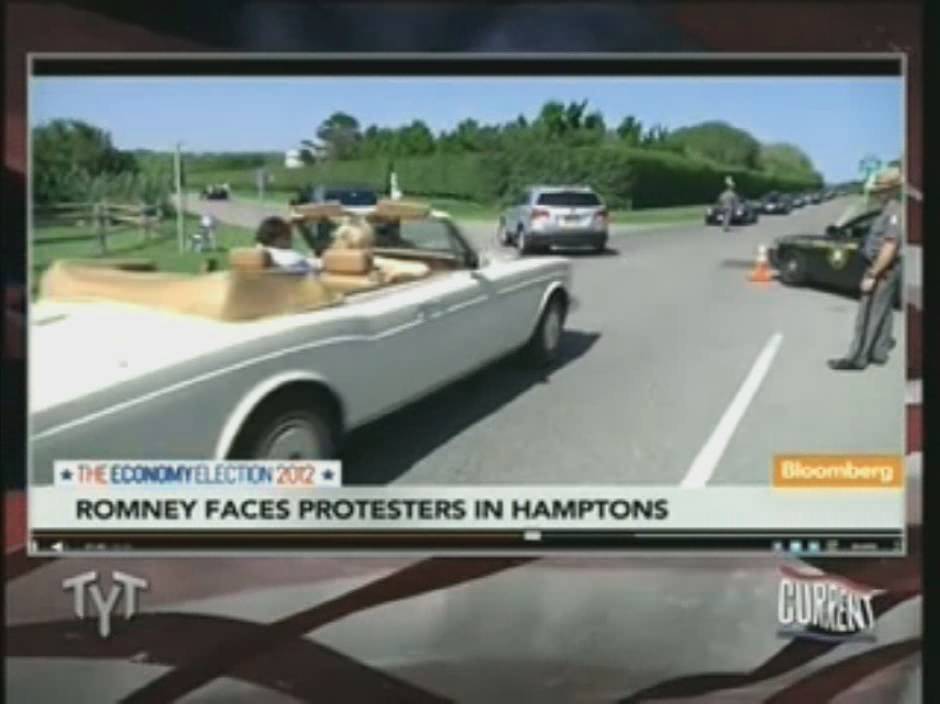 And speaking of which, Mitt Romney was in the Hamptons over the weekend. He went to three different fundraisers, including one at David Koch’s house, one at Ron Perlman’s house. And they were on average fifty thousand dollars ($50,000) per plate. The Koch one was more expensive: you got suckered if you went to that one and paid seventy five thousand dollars ($75,000). You would have had the same access as the other ones which were cheaper. And he raised is about three million dollars in one day.
  Now as all these people were pouring in, in their Ferraris, literally, Range Rovers, golden Mercedes—as was described in one of the articles—at these fundraisers, they also sometimes talk to the press and told us what they think of all the, you know, the money going into the system, they’re in favor of it, etc.
 [Beginning of video] “…Protesters in the process….Romney, his secret service detail, could be seen criss-crossing the Hamptons in their fleet of suburbans, donors lined up to gain access to these closed events. They were met by protesters at several of these events. Many of whom had been bused in from New York City. Some said they were part of the Occupy Wall Street movement.” [End of video]
 All right, I love the fake dog on the roof to make fun of them. But honestly they couldn’t get anywhere near the events. A couple of people were arrested trying to get onto the beach where the yachts had docked to go to some of these events. I am not kidding. Okay.
 “I don’t think the common person is getting it—my college kid, the babysitters, the nails ladies—everybody who’s got the right to vote. They don’t understand what’s going on. I just think if you’re lower income, one, you’re not as educated, two, they don’t understand how it works, they don’t understand how the systems work, they don’t understand the impact.”


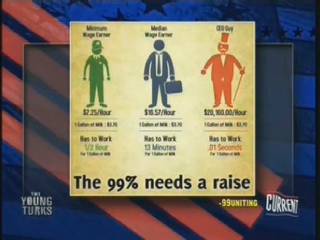

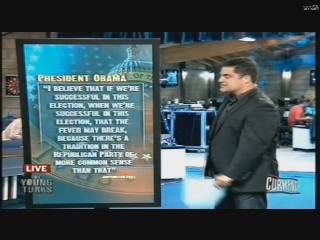


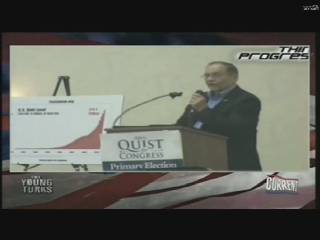




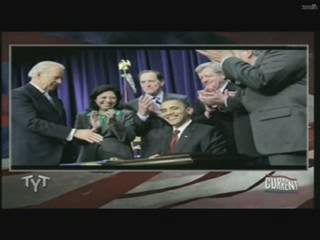


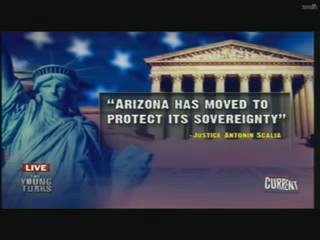


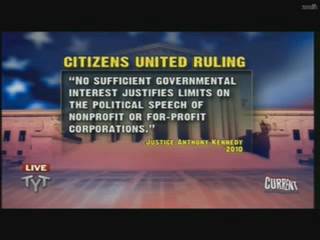


 Accountants CPA Hartford, LLC
Cenk Uygur on Harvard Professor Roberto Unger’s “Don’t Vote for Obama”
Roberto Unger is a former professor of President Obama. He was a professor of his at Harvard Law School. And he has come out with a video now where he says, “Don’t vote for Obama”.
It’s not because Professor Unger is conservative or republican. Quite to the contrary, he is a progressive and thinks that President Obama is doing great damage to the progressive cause.
First he starts by explaining what’s wrong with both parties but specifically the republicans:
“Neither of the two major political parties offer the country what it needs. The Republican party imagines that if only government became less costly and restrictive with lower taxes and fewer regulations, economic growth would make up for inequality. If this party had its way, inequality would become even greater than it is now and threaten freedom and prosperity even more than it now does.”
So he is definitely not on the republican side. He is not trying to help them. He says they would make income inequality and everything else in the country and prosperity much worse.
Now what does he think about the democratic party? Here is where it gets interesting:
“The Democratic Party proposes no new direction. Its idea is to put a human face on the program of its adversary, to implement their program with a humanizing discount. Give the bond markets what they want. They allow the reckless so long as they are also rich. Use fiscal and monetary stimulus to make up for the absence of any consequential broadening of economic and educational opportunity. Sweeten the pill of disempowerment with a touch of tax fairness even though the effect of any such tax reform is sure to be modest. This is less a project then it is an abdication.”
See, basically he is saying they are a Trojan horse. They are going to give you a human face to it—oh, look at us helping you out—and a touch of tax fairness, but in reality they do what the rich want, and he is right about the bond markets because whenever a President comes in, and Bill Clinton has talked about this, they say, “oh, the bond markets! My God, they will drive up our deficits even more because they will increase our interest rate. We won’t be able to pay, and so you got to do whatever they want.”
And what do they want? Shining it up, it turns out they want tax cuts for the rich, the same people who a lot of times have money in the bond markets, and they decide that you should do it by gutting the middle class.
So he says it is horrible for the democrats to go along and play that same game but just try to play it 10% better.
So now, onto President Obama; here’s the Unger’s tape:
“President Obama must be defeated in the coming election. He has failed to advance the progressive cause in the United States. He has spent trillions of dollars to rescue the moneyed interests and left workers and homeowners to their own devices. He has subordinated the broadening of economic and educational opportunity to the important but secondary issue of access to healthcare in the mistaken belief that he would be spared the fight. He has disguised his surrender with an empty appeal to tax justice. He has delivered the politics of democracy to the rule of money. He has reduced justice to charity. His policy is financial confidence and food stamps. He has evoked a politics of handholding; but no one changes the world without a struggle. Unless he is defeated, there cannot be a contest for the reorientation of the Democratic Party as the vehicle of a progressive alternative in the country.”
Now he says he has disguised his surrender with talks of compromise, etc. I think those are powerful words. I think that they are largely right. He says that he has basically surrendered our democracy to the rule of money. He’s almost definitely right about that. President Obama has not really gone for any systematic change along those lines, and whoever has more money wins almost every instance.
And he says, look, you cannot do this with hand-holding. If you want real change, which is what you promised, it takes a struggle to do it and you are not struggling. You give up every time there is any kind of fight. He is certainly right about that.
Now the last part of it is the interesting part. He says that we should do a real reorientation of the democratic party. If you don’t do that, if you elect President Obama again, they are not going to do some massive change to the democratic party. They are not going to become progressive. They are going to go along with the same system. Well, he is almost certainly right about that, too.
But does that mean you should vote against President Obama because, of course, the consequences and the alternative are horrible. Well, that’s what he addresses finally here:
“There will be a cost for his defeat in judicial and administrative appointments. The risk of military adventurism, however, under the rule of his opponents will be no greater than it would be under him.
Only a political reversal can allow the voice of Democratic prophecy to speak once again in American life. Its speech is always dangerous. Its silence is always fatal.”
Alright, and here is where I get into disagreement with him because, I think, the Supreme Court, of course, is massively important, he agrees to that. And how far we do down this rabbit hole of the rule of money is partly dependent upon the Supreme Court.
He says military adventurism under Obama has been horrible. Well, that’s largely true except it would be significantly worse under the republicans because it appears that every top foreign policy adviser to Mitt Romney can’t wait to go to war with Iran. And that is another level of disaster for the country.
And then finally he talks about a democratic prophecy. But that is where I think he is actually most wrong because the democrats are never going to ride to the rescue. Even if President Obama loses, and Romney takes us to another economic collapse and he takes us to another middle eastern war and all the things are horrible, the lesson that the democratic party will learn is, well, then we should be more like them. That is the lesson that they always learn because that is the lesson they get paid to learn. Okay? So there is no democratic answer.
The only answer comes from the people. And is does not have to do with this election, whether Obama wins or not. It has to do with a revolution against the system, a political revolution, not one of force, against this system that has the democrats and the republicans taking money from the same people, from the richest people in the country.
So I understand 90% of where Professor Unger is coming from but in the end, this election is actually fairly irrelevant because that system marches on either way. We have to attack the heart of it.
If you think President Obama is going to come to the rescue, you are a million percent wrong. If you think the democratic party is going to come to the rescue if President Obama loses, you are still a million percent wrong.
No, we have to start it. You know, obviously we think that we can do it through a Constitutional amendment. We talk all about that at Wolf Pac. You can find out more at wolf-pac.com. But no matter how you do it, no matter through which Constitutional movement it is, it got to be through that, it is not going to be through the useless democratic party.
There are two other reasons why you should not root for President Obama to lose even though as I tell you the election overall is not the answer. Number one is that you don’t win by losing. It is a bad strategy to say, hey, you know what? If we lose and we fall off a cliff, and then maybe we will get to the right results. No, you win by winning.
Number two, if there is a people’s movement, and we get some headway, the Constitutional amendment, etc., Mitt Romney will use the Office of the Presidency to try to fight you and destroy you every step of the way. Whereas President Obama is such a politician, that if he feels like you have got enough momentum and you are about to win, instead of fighting you tooth and nail, will switch sides and go, “I was with you all along; that is what I meant by change.” You see what I am saying? So that is the small shred of hope that you have with President Obama: that he is greasy enough as a politician that at the last moment he will help you a little bit rather than trying to hurt you and pretend that he was on your side.
And you know what? That is a much better hope than you have with Mitt Romney, who is just as greasy but is so corrupt that he would never ever turn on the moneyed interests and the powerful people in this country.
The Barefoot Accountant
Accountants CPA Hartford, Connecticut, LLC
Certified Public Accountant
Certified QuickBooks ProAdvisor